



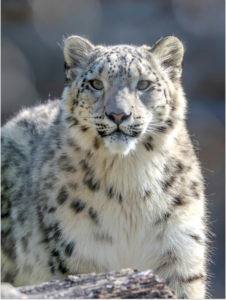
15-year-old Sara from the Afghanistan Newsroom explains why action is needed to protect her country’s wildlife
Afghanistan is often celebrated for its varied wildlife, but this reputation hides a troubling reality: the true state of Afghanistan’s wildlife is in decline due to inadequate legal protection and public indifference.
Despite frequent news reports on rare animals, the actual conditions are far from ideal. Admired from a distance, the country’s wildlife lacks the protection and stewardship it urgently needs.
According to the Convention on Biological Diversity, information on Afghanistan’s biodiversity is outdated and unreliable. However, it is good enough to get an idea. Many animals inhabit the country, primarily in mountainous regions such as the Hindu Kush and the Pamirs. Species include golden jackals, wild boar, Pallas’s cat, markhor (a kind of goat), Siberian ibex, grey wolf, Kabul vole, Afghan snowfinch, and, the most popular, the snow leopard.
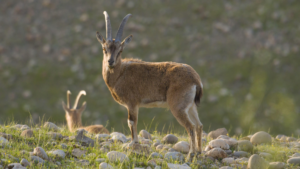
Additionally, Afghanistan’s varied habitats span three of the world’s eight biogeographical realms. Its central position between multiple biological zones makes it one of South Asia’s most ecologically rich and biologically diverse countries.
This rich wildlife is a popular symbol of Afghanistan’s identity and beauty, yet not many look at it as a responsibility. At least 149 animal species are in danger of disappearing from Afghanistan.
Not many people respect wildlife enough to actually protect it. In fact, many even go out of their way to harm it: both illegal hunting and animal trafficking are serious problems.
The public is to blame, but so is the government. Wildlife protection and environmental laws are weakly enforced.
The National Environmental Protection Agency (NEPA), an independent agency within government, was set up in 2007, but the country has still not created a National Biodiversity Strategy and Action Plan.
Many factors impact the wildlife in Afghanistan. Years of war in many areas of the country, including forests and mountains, destroyed the habitats of many species. Laws ban the hunting of endangered species, such as the snow leopard, but the lack of strong protection and law enforcement lets illegal hunting happen. Deforestation has also led to many creatures losing their homes.
Harbingers’ Weekly Brief
Subscribe to the Harbingers’ Weekly Brief, a newsletter written by the editorial board of Harbingers’ Magazine, the world’s youngest newsroom, delivered to your inbox every Monday morning.
![author_bio]()
![author_bio]()


Moreover, with a growing population and rapid urbanisation, more houses are being built. This not only drives animals away from their natural living environment, but also utilises resources they need for survival, such as woods and water. And, last but not least, climate change also affects Afghanistan’s wildlife.
The question is: why does it matter to protect wildlife? Wildlife is not just about animals looking pretty in freedom, it’s about balance. Different species support each other and keep the ecosystem running properly. Losing them can mess up nature and the survival of other species, including humans.
View this post on Instagram
We cannot keep pretending fixing the problem with wildlife is someone else’s job. Afghanistan’s biodiversity is not just a national issue, but a system that sustains life. Of course, you cannot single-handedly fix everything, but you can choose to have an impact.
We should refuse and report illegal hunting and adjust our lifestyles in a way that lowers our carbon footprint. If this seems hard, imagine being a snow leopard who’s being killed just because it looks pretty. If we don’t take action, species will start to disappear, ecosystems will suffer and humans will experience the results.

Edited by:

© 2026 The Oxford School for the Future