Harbingers’ Magazine is a weekly online current affairs magazine written and edited by teenagers worldwide.
harbinger | noun
har·bin·ger | \ˈhär-bən-jər\
1. one that initiates a major change: a person or thing that originates or helps open up a new activity, method, or technology; pioneer.
2. something that foreshadows a future event : something that gives an anticipatory sign of what is to come.
We and our partners may store and access personal data such as cookies, device identifiers or other similar technologies on your device and process such data to personalise content and ads, provide social media features and analyse our traffic.
As I walk into class, I feel something missing from my pocket—my phone.
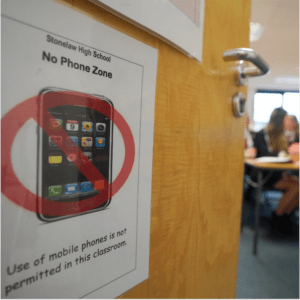
With Hungary’s new legislation implementing a complete ban on phones,students can no longer bring them onto campus.
At the beginning of the day, we have to put them into individual lockers with the key held by the school administration.
The only exemptionare diabetes sufferers who need apps to moderate their blood sugar levels.
The Hungarian government seems to believe that phones are the root of educational problems, but are they?
While the intention is to foster a more focused and engaged classroom, the result is quite the opposite. The ban creates an environment where technology is only viewed as inherently harmful to learning, ignoring its potential benefits.
If a student is caught with a phone during school hours, even in breaks, the penalties can be as severe as suspension. Instead of creating a healthier learning environment, the legislation has left teachers, principals and students frustrated.
In my own experience, the ban has caused unexpected logistical problems. My classmates and I often arrive late to class, not because we are distracted by our phones, but because we don’t know what time it is. Few clocks are installed in our school and before the ban we used our phones to check the time. Now, we’re left wandering the halls, hoping to spot a clock, a situation that is more disruptive than helpful.
The focus on the negative effects of phones overlooks the many ways they can actually enhance learning. Phones provide access to dictionaries, databases, translators, and other academic resources for research related to schoolwork. Phones can also help us with schoolwork, so we can contact each other about group projects or even last-minute review sessions before exams.
Some may argue that school computers can replace phones. But in reality, many schools either lack computers for all students or provide outdated and unreliable devices.
Instead of an outright ban, a more reasonable approach would be to set clear guidelines for responsible phone use. It could be in the form of increasingly severe punishments: an initial warning to put the phone away; next it is removed until the end of a class period; then until the end of the school day, and so on.
Importantly, these consequences would apply only to those who misuse their phones, not to the entire student body, most of whom use them responsibly.
If the goal of the ban is to curb phone addiction, it’s shortsighted. If students want to, for example, use gambling apps in class, they will simply wait and do it after school. A ban in the classroom doesn’t address the underlying problem—it just shifts the issue to a different time.
Possible solutions
Instead of banning phones, schools should focus on teaching digital wellness. Rather than framing technology as harmful, they should educate us about how to be digitally literate and how we can balance our screen time and responsibly use technology. Some countries, such as Singapore and Malaysia, are forerunners in incorporating technology into school curriculums.
Workshops or lessons on digital wellness could help students understand both the benefits and the distractions that phones present. Additionally, schools should teach us how to be responsible users of the internet, social media, and video games. By restricting our use of phones and technology, schools deny us the opportunity to develop the skills we will need in the future.
Government and school administrators miss the bigger picture. Instead of obsessing over technology in classrooms, they should focus on bettering the poor quality of the public school system in Hungary.
This isn’t just a Hungarian problem: US states such as Utah and Maryland and other European countries are pushing for similar regulations. It’s a global issue, and the focus is misplaced.
To truly prepare students for the future, we should embrace technology, not fear it.
By banning phones, Hungary is setting up its students for failure, disconnecting us from the very tools that shape modern life. If officials want to improve education, they should focus on what matters: better resources, more support for teachers, and a system that meets the needs of today’s students—not a ban that ignores reality.
Lola Kadas joined Harbingers’ Magazine in the summer of 2024 as a contributor during the Oxford pop-up newsroom. After completing the newsroom and writing course, she became a staff writer later that autumn, covering society and public affairs.
Her strong writing and dedication to the magazine led to her appointment as Society Section Editor in 2025. During this time, she also reported from Bali, Indonesia, where she worked on a special project exploring the local mental health landscape and produced a series of thought-provoking articles.
Following a successful year in that role, and in recognition of her steady development and commitment, Lola stepped into the role of Editor-in-Chief in 2026, sharing the position with Arnav Maheshwari.
This will mark the first time the magazine is led by joint Editors-in-Chief, reflecting the growing scope and ambition of the publication. In her new role, Lola will also introduce a fact-checking system to further strengthen the magazine’s editorial standards.
Born in 2009, Lola has lived in both Budapest, Hungary, and California, United States. She is interested in music, pop culture, politics and mental health, and plans to study entertainment business in the future. She speaks English, Hungarian, French and Spanish.
In her free time, she enjoys going to concerts and creating studio art, and is a fan of Taylor Swift’s music.
Subscribe to the Harbingers’ Weekly Brief, a newsletter written by the editorial board of Harbingers’ Magazine, the world’s youngest newsroom, delivered to your inbox every Monday morning.
See you on Monday!
Ooops - please try again.
opinion
🌍 Join the World's Youngest Newsroom—Create a Free Account
Sign up to save your favourite articles, get personalised recommendations, and stay informed about stories that Gen Z worldwide actually care about. Plus, subscribe to our newsletter for the latest stories delivered straight to your inbox. 📲
We use cookies to ensure that we give you the best experience on our website. If you continue to use this site we will assume that you are happy with it.