
logo

Harbingers’ Magazine is a weekly online current affairs magazine written and edited by teenagers worldwide.

harbinger | noun

har·​bin·​ger | \ˈhär-bən-jər\

1. one that initiates a major change: a person or thing that originates or helps open up a new activity, method, or technology; pioneer.

2. something that foreshadows a future event : something that gives an anticipatory sign of what is to come.

cookie_image

We and our partners may store and access personal data such as cookies, device identifiers or other similar technologies on your device and process such data to personalise content and ads, provide social media features and analyse our traffic.

introduction image

Social media is an integral part of the lives of modern teenagers.

Picture by: Kaboompics.com | Pexels

Article link copied.

Should there be age limits on social media? It’s a difficult decision

The seven members of Harbingers’ Editorial Board discuss the pros and cons of banning social media for teens
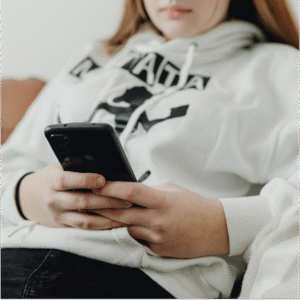
Australia has already passed a ban on social media for under-16s, despite Meta’s efforts to launch “teen accounts” with close parental supervision, leading to debates in other countries such as the UK as to whether or not they should do the same.

As Harbingers’ Magazine’s Editorial Board, we have discussed the topic among ourselves. We find ourselves in a similar position to other teens around the world as well as adults in governing bodies that are making these decisions: we are torn. We can see both strong pros and cons in social media and its influence on young people, making us ambivalent about what is the right course of action.

We know social media is crucial to keeping up with pop culture, which is something many teenagers find entertaining. Not only does social media use allow their viewers to share their own milestone events, but they also allow them to keep up with the releases of their favourite artists and actors, as well as influencers’ everyday lives.

The connection built between celebrities through social media allows people to feel as though they share a community with the celeb.

Additionally, teenagers deserve to explore, even if it’s not entirely good for them. That’s just something we all have to experience – and the sooner, the better.

It would be nearly impossible to completely omit social media from teens’ lives, as it is no longer just a source of information, but a gateway to belonging.

It’s easy to focus on the chaos of social media, but for many teenagers, it’s also where their creativity blossoms when a healthy balance is kept. Individuals our age are starting their own small businesses from the ground up, using their laptops and phones to sell digital art, handmade jewellery, thrifted clothing and more.

What started as casual side hobbies have become full-on ventures. And going viral isn’t the only goal. Social media helps teen creators find communities, spot trends and actually sell what they make. Some platforms are even adding shopping features to support that. TikTok and Instagram have introduced built-in storefronts and marketplaces to help young sellers.

American teen entrepreneur Fiona Frillsis a great example. She started on YouTube and built a teen skincare brand called Frilliance,based on what her followers shared about their skin struggles. But it’s become more than a brand. It’s a space where other teens can earn money, learn to sell, and feel part of something that truly understands them. In her own words: “My customers and followers are more than just those titles – we’re building a community around my personal brand and business.”

Banning under-16s from social media risks cutting them off from valuable tools and learning skills. In 2023, more than half of Gen Z entrepreneurssaid their business is their primary source of income, with teens playing an increasingly significant role in the digital creator economy.


View this post on Instagram


A post shared by fiona frills (@fionafrills)

But, the original use of social media was to create a sense of community, allowing individuals to connect with friends, family and colleagues. It can be viewed as a place for people with similar interests and thoughts to share their opinions and build connections. If used responsibly, teenagers are given the opportunity to discover individuality and new interests, especially those from isolated or close-minded environments.

Of course, the benefits of age limits are not insignificant. How many times do you think 10-, 12-, or even 15-year-olds compare themselves absentmindedly to those in their twenties online?

Those are adults, and the ones who try to “compete” with them or aspire to be like them are still in development – a comparison that is unhealthy.The way it affects teen’s self-esteem is unprecedented.

To that we can add that one of social media’s biggest threats is the spread of misinformation that is harmful to teens or those around them. Poor media literacy and the inability to distinguish between real and fake news makes many young people susceptible to misinformation. This can heavily influence their attitudes, beliefs, behaviours and social interactions.

Social media algorithms are designed to prompt content that aligns with a user’s beliefs, usually based on their level of interaction with a post. Thus these algorithms exclude or discredit content that opposes the user’s views, which is incredibly harmful as it reinforces one’s biases, creating an “echo chamber”. As a consequence, social media accelerates the radicalisation of youth by constantly exposing them to extremist or unregulated content.

As news editors, we find positive benefits that make social media a valuable asset. Setting harsh age restrictions could lead to negative consequences such as losing connection to online communities, business opportunities and enjoying peoples’ creative outlets.

However, we recognise the threats of social media for teens, leading us to not be fully opposed to harsher age limits, especially for younger teens and children from Gen Alpha. So, if we who live and breathe social media are uncertain about what to do, then it makes a lot of sense for politicians and parents to be torn too. We are just going to have to wait and see.


Written by:

author_bio

Noah Saphier

Editor-in-Chief 2025

New Jersey, United States of America

Born in 2007 in New Jersey, Noah Aaron Brühl Saphier studies in Englewood New Jersey, United States of America. He is interested in journalism, economics, science, sports, and history.

Noah joined Harbingers’ Magazine in the summer of 2023. A few months later, he became a writer covering economics, business, and politics. After almost two years of dedication and hard work, he was promoted to Editor-in-chief of the magazine. In March 2025, he took the helm from Jefferson He, who stepped down after completing his one-year term.

In his free time, Noah plays tennis and the violin, learns about exploration in the ocean and space, and travels.

Noah speaks English, Spanish, and German.

author_bio

​​Sofia Vorobei

Culture Section Editor 2025

Vergel, Spain

Born in 2009 in Kyiv, Sofia moved to a town in Spain close to Valencia in 2020. With her ability to quickly learn languages, she adjusted to her new life seamlessly.

Sofia is an aspiring sports broadcast journalist. She’s passionate about a wide range of subjects including culture, cinema and  global affairs.

She joined Harbingers’ Magazine in the summer of 2023, and since then, she began to consistently explore the intersections of culture, creativity, and society. This, along with Sofia’s exceptional writing skills, led to her promotion as the Culture Section Editor at Harbingers’ Magazine in March 2025. Simultaneously, she serves as the Afghanistan Newsroom Editor.

In her free time, Sofia stays busy doing fitness, traveling to new places, and writing short stories.

Sofia speaks Ukrainian, Spanish, English, and Russian.

author_bio

Arnav Maheshwari

Economics Section Editor 2025

Georgia, United States

Born in 2009, Arnav lives in Atlanta, Georgia, United States. He is deeply interested in economics, global development, and financial systems, and hopes to study economics at university.

Arnav joined Harbingers’ Magazine in October 2024 as a winner of The Harbinger Prize 2024 in the Economics category, earning a place in the Essential Journalism Course. During this time, while writing about the global economy, entrepreneurship, and macroeconomics, he demonstrated outstanding writing skills and dedication to the programme. His commitment earned him the position of Economics Section Editor in March 2025.

Outside Harbingers’, Arnav pursues projects connected to economic education, research, and innovation. He has a strong passion for startup leadership and for building initiatives with real-world impact. He has also earned recognition on the global stage, captaining his team to a second-place finish at the Economics World Cup, one of the most competitive international economics competitions.

He speaks English, Hindi, and is learning Spanish.

author_bio

Charlotte Wejchert

Human Rights Section Editor 2025

Warsaw, Poland

Born in 2008 in Zurich, Switzerland, and raised in Warsaw, Poland, Charlotte has studied in Monaco for the last eight years. She is interested in the humanities and plans to study History and English.

Charlotte joined Harbingers’ Magazine in August 2024 as a contributor. She took part in a reporting trip to Yerevan, Armenia, covering the refugee crisis in the aftermath of the Nagorno-Karabakh (Artsakh) war and collaborating with students from the Harbingers’ Armenian Newsroom. The trip resulted in several thought-provoking articles, earning her a regular spot at the magazine.

In the autumn of 2024, after completing the Essential Journalism Course, Charlotte became a writer focusing on social affairs, human rights, politics, and culture. Her exceptional writing skills and dedication to the magazine led to her appointment as Human Rights Section Editor in March 2025. Simultaneously, she will serve as the Armenian NewsroomEditor.

In her free time, Charlotte loves painting and photography. She won the International King’s College art competition in 2023 and was a runner-up in 2024. She also takes up leadership roles and public speaking, being in her school’s student senate for the last three years and attending conferences at UN headquarters primarily regarding human rights and the climate.

Charlotte speaks Polish, English, French and Italian.

author_bio

Klara Hammudeh

Politics Section Editor 2025

Warsaw, Poland

Born in 2008 in Warsaw, Poland, Klara joined Harbingers’ Magazine to cover international affairs, crime, and music.

She joined the magazine in March 2024, writing numerous articles on politics and music. In 2024, she reported on the US presidential elections on the ground and, in February 2025, covered the Middle East crisis from Amman, Jordan. Her strong writing skills led to her appointment as Politics Section Editor in March 2025. Simultaneously, she will serve as the Poland 2025 Presidential Election Newsroom Editor.

In the future, Klara plans to study psychology, international politics, or criminology, preferably in the United States.

In her free time, she enjoys reading, dancing, listening to music, and exploring pop culture—particularly how Broadway and West End adapt classic Disney stories into musicals.

author_bio

Hesandi Ravisinghe

Science Section Editor 2025

Galle, Sri Lanka

Born in 2009, Hesandi lives in Galle, Sri Lanka, and has a deep interest in art, nature, and wildlife, particularly elephants, leopards, and birds.

She joined Harbingers’ Magazine as a contributor to its Sri LankanNewsroom. After completing the Essential Journalism Course, she became a writer, continuing to cover wildlife and science topics. Her passion for journalism and dedication to her work led to her promotion as Science Section Editor in March 2025. She will also be editing articles from the NepaliNewsroom.

In her free time, Hesandi enjoys painting and has a passion for travel.

She speaks English and Sinhala and is currently learning Indonesian.

author_bio

Lola Kadas

Society Section Editor 2025

Budapest, Hungary

Born in 2009 in Budapest, Hungary, Lola has lived in Budapest and California, US. She is interested in music, pop culture, politics, and mental health, and plans to study psychology.

Lola joined Harbingers’ Magazine in the summer of 2024 as a contributor during the Oxford Pop-up Newsroom. After completing the newsroom and the Essential Journalism Course, she became a writer in the autumn of the same year, covering society and public affairs. Her strong writing skills and dedication to the magazine led to her promotion to Society Section Editor in 2025.

In her free time, Lola plays guitar, piano, and volleyball, enjoys going to concerts, and creates various types of studio art. She is also a fan of Taylor Swift’s music.

Lola speaks English, Hungarian, French, and Spanish.

editorial

🌍 Join the World's Youngest Newsroom—Create a Free Account

Sign up to save your favourite articles, get personalised recommendations, and stay informed about stories that Gen Z worldwide actually care about. Plus, subscribe to our newsletter for the latest stories delivered straight to your inbox. 📲

Login/Register