Harbingers’ Magazine is a weekly online current affairs magazine written and edited by teenagers worldwide.
harbinger | noun
har·bin·ger | \ˈhär-bən-jər\
1. one that initiates a major change: a person or thing that originates or helps open up a new activity, method, or technology; pioneer.
2. something that foreshadows a future event : something that gives an anticipatory sign of what is to come.
We and our partners may store and access personal data such as cookies, device identifiers or other similar technologies on your device and process such data to personalise content and ads, provide social media features and analyse our traffic.
The first Avatar premiered in 2009 and ignited cinema screens because it made audiences feel as though they were being transported into a different dimension.
Pandora glowed with vibrant, breathtaking colours, and its creatures felt entirely new — James Cameron’s world-building redefined what visual storytelling could be. Avatar: The Way of Water, released after a 13-year break, carried that legacy forward, expanding the universe with new characters and emotional depth.
Now, Avatar: Fire and Ash arrives not just as another chapter, but as a transformation — from a dreamy love story into something raw and urgent, where the narrative grows up alongside its audience.
The most noticeable difference between Fire and Ash and its predecessors is the message. While the earlier films invited audiences to escape into Pandora’s beauty, focusing on how love between an alien and a human flourishes, this instalment asks us to confront the fragility of the Avatar world.
Fire becomes the dominant element, symbolising destruction, greed, and irreversible loss. The landscapes are still visually stunning, but they feel wounded. This shift may seem like a downgrade for viewers expecting pure visual comfort and a continuation of the love story — yet it is a powerful upgrade in meaning. Beauty, the film suggests, is not guaranteed; it must be protected.
Nonetheless, the message of the third film is what truly sets it apart. Pandora has always served as a metaphor for Earth, but the connection has never felt this direct. Burning forests, scarred land, and displaced communities mirror real-world climate disasters and the consequences of our neglect.
Jake Sully in ‘Avatar: Fire and Ash’ (2025) directed by James Cameron.
The film no longer gently hints at environmental responsibility. It openly confronts those who disregard the planet, challenges the mindset that nature is expendable, makes the audience feel uncomfortable — even guilty — for complacency, and reminds us that once destruction begins, restoration is never guaranteed.
In a world where environmental warnings and campaigns are often ignored or delayed, Avatar: Fire and Ash feels uncomfortably relevant. It transforms nostalgia into responsibility. The film asks us to remember why Pandora once felt sacred and, in doing so, recognise that Earth deserves the same honour. What began as a cinematic miracle now stands as a message carved in flame: our planet is not an infinite resource, but a gift — and gifts, once destroyed, cannot be replaced.
Fire and Ash may not be the most spectacular or memorable Avatar film — but it might be the most necessary.
Even though we entered the cinema with scepticism, we left convinced that the third instalment is essential, not excessive. It deepens the entire Avatar universe and enriches its history.
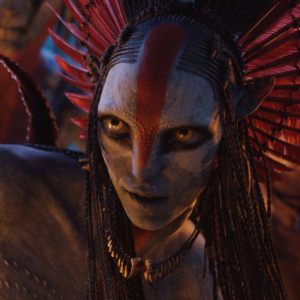
Avatar: Fire and Ash introduces us to a third Na’vi clan: the Ash Na’vi. Through them, we discover that humans are not the only threat to Pandora. The clan and its beliefs force us to rethink everything we thought we knew about Eywa. In this film, Eywa becomes more complex, deeper, and less merciful than before. We also witness the development of the relationship between Eywa and Kiri.
Importantly, this instalment allows us to focus more closely on the children’s lives and perspectives. We see them testing their limits, forming deeper relationships, discovering their identities, and coping with the ever-present danger of war. The focus shifts away from Jake Sully towards Lo’ak, Kiri, Tsireya, and Spider, who rebel against their parents in an attempt to save themselves and build the kind of lives they truly want.
Harbingers’ Weekly Brief
Subscribe to the Harbingers’ Weekly Brief, a newsletter written by the editorial board of Harbingers’ Magazine, the world’s youngest newsroom, delivered to your inbox every Monday morning.
As in the previous part, the soundtrack was composed by Simon Franglen. As expected after the first two films, the CGI is unmatched and perfectly brings Pandora to life. Combined with Franglen’s carefully crafted score — which captures the essence of each moment and complements every scene — the film truly transports the viewer to another world.
The magic of Avatar’s music lies in its simplicity and organic feel. Franglen avoids unnecessary lyrics, except for those in the Na’vi language, relying instead on melodies that reflect Pandora’s nature. One thing we did not enjoy was the final song, “Dream as One” by Miley Cyrus. Compared with the 2022 track “Nothing Is Lost (You Give Me Strength)” by The Weeknd, it feels disappointing. We felt it neither captured nor summarised the emotional intensity of the film — and its pop style does not fully fit the world of Avatar.
Although we were sceptical and did not expect this film to surpass the others — or even significantly matter to the plot — after watching it, we believe it is a must-see. The third film expands the story of Pandora’s mysterious world, offering new knowledge and new challenges for its inhabitants. Combined with extraordinary visual effects and a moving soundtrack, the experience is unforgettable — and we would recommend it to everyone.
Born in 2009 in Poland, Aleksandra joined Harbingers’ Magazine to explore the upcoming Polish presidential elections.
In her free time, she enjoys rock climbing, reading and writing, and discovering new music. She is also deeply interested in the evolving trends of fashion and how they shape modern culture.
In the future, she plans to study Fashion Business, aspiring to build a career in the dynamic world of style and design.
Kaja Majewska born in 2009 in Warsaw, Poland, joined Harbingers’ Magazine to write about and share the beauty of film, photography and literature.
Her thoughtful reflections on cinema and culture, along with her creative eye and strong engagement with the magazine’s cultural coverage, earned her the role of Film & Book Club Editor for 2026. In this position, she helps lead conversations around film, books and visual storytelling within the Harbingers’ community.
She plans to study international relations, psychology in business, or film production, aspiring to pursue a career where she can be proud of the work she creates and the stories she helps bring to life.
In her spare time, Kaja enjoys discovering and reviewing films, reading philosophical books, designing art, cooking and baking. She also enjoys staying active through sport, particularly volleyball and snowboarding.
film & book club
🌍 Join the World's Youngest Newsroom—Create a Free Account
Sign up to save your favourite articles, get personalised recommendations, and stay informed about stories that Gen Z worldwide actually care about. Plus, subscribe to our newsletter for the latest stories delivered straight to your inbox. 📲
We use cookies to ensure that we give you the best experience on our website. If you continue to use this site we will assume that you are happy with it.