Harbingers’ Magazine is a weekly online current affairs magazine written and edited by teenagers worldwide.
harbinger | noun
har·bin·ger | \ˈhär-bən-jər\
1. one that initiates a major change: a person or thing that originates or helps open up a new activity, method, or technology; pioneer.
2. something that foreshadows a future event : something that gives an anticipatory sign of what is to come.
We and our partners may store and access personal data such as cookies, device identifiers or other similar technologies on your device and process such data to personalise content and ads, provide social media features and analyse our traffic.
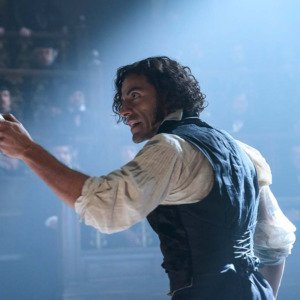
The newest adaptation of Frankenstein, long awaited by millions of fans, was released on Netflix in November.
The movie directed by Guillermo del Toro, who has been awarded three times with an Oscar and twice with a Golden Globe, aroused great expectations. Coupled with Jacob Elordi, Mia Goth and Oscar Isaac as the main actors, the film, even before the premiere, was described as a once-in-a-generation creation.
The director was crafting something far more ambitious than a classic literary adaptation. What matters is not only the concept and idea, but also the way in which the actors are able to convey their feelings and internal thoughts of their characters.
Elordi’s interpretation of the Creature immediately captivates the viewers, leaving them fascinated and slightly dazed from the very first scene. He is able to communicate so much without using any words, just by expressing subtle facial movements and instinctive reactions to those around him.
When Goth appears for the first time as Elizabeth Lavenza, it becomes immediately clear that the Creature perceives her as a source of safety and warmth, which is a contrast to the presence of Dr. Frankenstein, played by Isaac.
Based on del Toro’s previous works, including Pan’s Labyrinth (2006), Pinocchio (2022) and Nightmare Alley (2021), fans could have already expected that the film’s scenography and visual design would play a crucial role in shaping the audience’s experience. Breathtaking landscapes, majestic natural scenery, and the impressive architecture where the action unfolds, highlight the beauty within this tragic and thrilling story.
The director repeatedly places the Creature against vast, empty landscapes, emphasizing not only its profound loneliness but also its deep yearning for a companion.
What makes this year’s adaptation of Frankenstein stand out, is the director’s unique idea of approaching the story from a deeper, more emotional perspective. Guillermo del Toro isn’t trying to recreate Mary Shelley’s novel line by line.
Instead, he keeps the core: creation, responsibility and abandonment, and reshapes it into something more vulnerable and intimate. Shelley’s text warns about scientific arrogance and its threats, refresh del Toro shifts the focus more towards emotional responsibility.
Del Toro has always been interested in characters who are treated as monsters or outsiders before they even get a chance to speak, and in Frankenstein this theme is developed more than in any previous adaptations.
The Creature isn’t simply terrifying because of what he does or how he looks, but because of how deeply he feels and how misunderstood he is. He is denied connection which is the only thing he desires and that is where the horror comes from.
This makes the story feel less like a warning about scientific discoveries and more like a reflection of loneliness, grief, and the need to be seen. Compared to the original novel, del Toro adds more vulnerability and more focus on the bond between the creator and the creation.
Harbingers’ Weekly Brief
Subscribe to the Harbingers’ Weekly Brief, a newsletter written by the editorial board of Harbingers’ Magazine, the world’s youngest newsroom, delivered to your inbox every Monday morning.
See you on Monday!
Ooops - please try again.
After watching the movie, the title feels almost ironic as Frankenstein is the name of the doctor, not the Creature. Del Toro leans to the idea that Victor might be the closest thing to a monster in the story, however, not because he is evil but because he refuses to take responsibility for what he brought into the world.
The film also leaves space for reflections on topics such as artificial intelligence and on what happens when we create something we lose control of. Del Toro leaves the audience with a reminder that creation always come with consequences and that we are responsible for we set in motion.
Born in 2008 in Warsaw, Poland, Barbara joined Harbingers’ Magazine to write about the stories that inspire her most — from international affairs to the newest books and movie premieres.
She is especially interested in fashion, business, law, and economics. If not at school, she loves to travel, dance, listen to music and read, always eager to discover new experiences and ideas.
In the future, she plans to study either business and fashion, law or psychology.
Film & Book Club Editor and Global Newsrooms Manager
Warsaw, Poland
film & book club
🌍 Join the World's Youngest Newsroom—Create a Free Account
Sign up to save your favourite articles, get personalised recommendations, and stay informed about stories that Gen Z worldwide actually care about. Plus, subscribe to our newsletter for the latest stories delivered straight to your inbox. 📲
We use cookies to ensure that we give you the best experience on our website. If you continue to use this site we will assume that you are happy with it.