

17-year-old Matthew explores the racial politics affecting two Chinese American athletes during the 2026 Winter Olympics
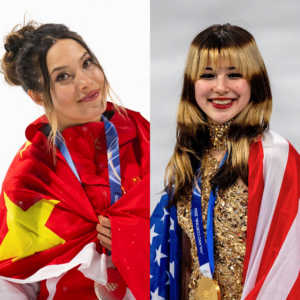
“In a world of amoral sell-outs like Eileen Gu, be an Alysa Liu” is the mantra that briefly took over my social media feed during the Winter Olympics in Italy in February.
It refers to the contrasting allegiance of two Chinese American athletes, praising figure skater Alysa Liu’s historic win for Team USA while criticising San Francisco-born freestyle skier Eileen Gu’s decision to represent China.
The Winter Olympics have long been dominated by Western nations with teams composed largely of white athletes, by virtue of a persistent lack of diversity in winter sports. Thus, to see Asian athletes such as Gu and Liu dominating the podium at Milano-Cortina sure felt refreshing and exhilarating.
Yet, they weren’t immediately recognised as products of Chinese American success, but rather as political pawns that divided the internet over sporting allegiance amid tense US–China relations.
Since her debut at the 2022 Beijing Games, 22-year-old Eileen Gu has gone on to become the most decorated freestyle skier in Olympic history, securing three gold and three silver medals. However, her success has sparked mixed reactions in the US.
Harbingers’ Weekly Brief
Subscribe to the Harbingers’ Weekly Brief, a newsletter written by the editorial board of Harbingers’ Magazine, the world’s youngest newsroom, delivered to your inbox every Monday morning.
![slide image]()
![author_bio]()
![author_bio]()


Her status as an American competing for China remains highly controversial, especially when compared to 20-year-old Alysa Liu, a fellow Bay Area native whose double gold in figure skating was widely praised, celebrated and politicised.
Caught between flags
Gu and Liu were both born in northern California to single immigrant parents from China. Liu’s father Arthur is a former activist and political refugee who fled China due to his involvement in the 1989 pro-democracy protests, while Gu’s financier mother Yan moved to the States to pursue higher education.
Given their background, both athletes were initially recruited by Beijing in a naturalisation project that targeted established foreign-born athletes in winter sports, resulting in Gu switching to compete for China in 2019.
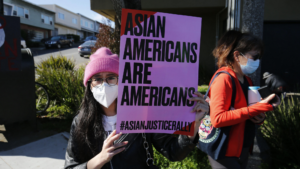
Arthur Liu, however, rejected an offer for his daughter to compete under the Chinese flag at Beijing, citing the country’s human rights violations and lack of political freedom.
For many Americans, Liu’s story as the daughter of an immigrant fleeing communism represents the fantastical ideals of the American Dream. She is the patriotic heroine who “chose” democracy over tyranny, freedom over oppression, and her country over heritage.
On the other side of the coin, Gu has been labelled as a “traitor”and “sell-out”. Several Republican politicians, including vice president JD Vance and Tennessee congressman Andy Ogles, have weighed in, finding it hypocritical for her to “benefit” from American education and freedom while representing a foreign adversary.
Ogles has even gone as far as proposing a bill to impose a 100% tax on American athletes who compete for a “foreign entity of concern”, specifically naming Gu as an example.
View this post on Instagram
‘Model minority’ myth
At the heart of this comparison between the two women is the playbook tactic of pitting one immigrant against another, which is linked to the so-called “model minority” myth in the context of Asian Americans.
First coined in 1966 by sociologist William Petersen, the term “model minority” refers to minority groups that are perceived to be highly successful, especially when contrasted with other minorities.
This designation is often applied to Asian Americans, who, as a group, have attained a high degree of educational and financial success, which has been attributed to the stereotypical belief that Asians are hardworking, obedient and able to excel in STEM fields relative to other races.
Recent US government statistics show that Asian households have the highest median income among all racial and ethnic groups in the US, so we can see it is not a completely baseless claim. So how exactly is it a myth if it is somewhat grounded in reality?
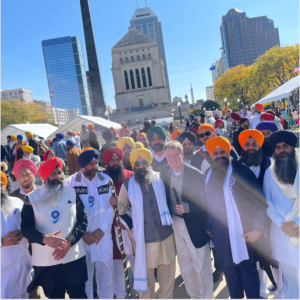
Many have pointed to the problematic generalisation of Asian Americans as a collective, since statistics are unable to highlight the diverse composition of communities within the group itself. As with any stereotype, not all Asians in the US align with the characterisation of members of their racial category.
The reality is that Asian American identity is much more diverse, as a Pew Research Center surveyfrom 2023 explains. Asian origins encompass more than 20 different groups from across East and Southeast Asia, as well as the Indian subcontinent.
Thus, the overgeneralisation of people of Asian descent becomes a monolith, as though all of us are equally successful in terms of education, income and occupation. This leads to the erasure of wealth and status disparity within the community, and undermines the position of Asians in white-dominated spaces.
For instance, while Indians, Filipinos and Taiwanese are among the highest-earning groups in the US, Burmese, Bangladeshi and Hmong Americans experience lower median incomes and higher poverty rates when compared to the national average.
It is also important to note that these statistics do not reflect the fact that Asians are still disproportionately under-represented in top positions of societal importance, such as tech, politics and even sport.
Most Asian Americans continue to face what is called the “bamboo ceiling”, holding roughly 5.6% of executive roles in Fortune 500 corporations and 4% of Congress membership despite making up 6-7% of the US population.
The myth also affirms that there is a “right way” to be Asian American. Many Asians in the US, as well as other people of colour, have long felt the need to distance themselves from their own culture in a quiet form of assimilation, by conforming to the standards of white America in order to uphold their “model minority” status, to feel validated and accepted by the mainstream.
Thin line between criticism and xenophobia
In the context of Gu and Liu’s supposed rivalry, this myth further reinforces the narrative that Asian Americans are “perpetual foreigners”, regardless of their citizenship status.
Asian Americans are often stereotypically believed to be more loyal to their home country than the United States, and as such they are the “outsiders” who are never American enough.
The portrayal of Liu as a patriot in juxtaposition to Gu’s “treachery” suggests that America’s embrace of its Asian citizens is conditional, as if this was a give and take sort of situation. The Asian community has already suffered a surge in hate crimes and violence during the Covid-19 pandemic, when the Atlanta spa shootings in 2021 that killed six East Asian women shocked the nation.
By weaponising Gu’s personal choice, we risk validating xenophobic narratives that have long positioned Asian Americans at an “othering” position in society.
This is especially dangerous considering the current political climate in the United States, under which people of colour are continuously being targeted and pursued systematically by ICE (Immigration and Customs Enforcement) agents for their racial background.
The fabricated rivalry between the two athletes mirrors this ongoing anxiety over who truly “belongs”. When citizenship itself becomes intertwined with race and ethnicity, America risks losing the very essence of multiculturalism and racial harmony that has made it great in the eyes of so many.
If the Olympics are meant to embody excellence, respect and friendship, is it not ironic that these virtues seemingly do not apply when athletes bear the “wrong” flag? Eileen Gu and Alysa Liu have both inspired countless young people worldwide, as proof that the spirit of sports transcends borders and cultures.
In today’s ever-changing globalised world, perhaps what America needs is to celebrate that dynamic, instead of resisting it.

Edited by:

© 2026 The Oxford School for the Future