



16-year-old Jamie explains scientifically proven techniques that could boost your grades
Whether you are struggling with exams or juggling between assignments while trying to stay on top of demanding school work, a good memory is essential. Many of us often feel overwhelmed with the vast volume of information we need to remember.
The good news is that your memory can be trained. There are many easily adaptable techniques that can be fitted to our different abilities and personalities, and help us store information in the brain so we can recall it easily.
This piece breaks down five simple strategies to boost our memory and academic performance.
Harbingers’ Weekly Brief
Subscribe to the Harbingers’ Weekly Brief, a newsletter written by the editorial board of Harbingers’ Magazine, the world’s youngest newsroom, delivered to your inbox every Monday morning.
![author_bio]()
![author_bio]()


1. Priming
Priming exposes students to new information in a way that prepares them for effective learning before teaching begins.
For example, scanning textbook pages in advance, underlining key words and reading through titles and subtitles can activate existing knowledge and make new information easier to remember during the lesson.
In cognitive psychology, priming works by activating schemas – mental frameworks based on prior knowledge or expectations that can help us make sense of new information. When a schema is already active, the brain can process and store new information more effectively.
By creating links between new material and existing knowledge, priming improves information retention and reduces effort required during recall, as neural pathways are already active.
Students can use this technique by briefly exposing themselves to key words, images or concepts before a lesson. This would be especially helpful with subjects that are hard to digest, such as biology.
2. Active recall
Active recall helps move newly learned information into long-term memory by strengthening connections in the brain.
Passively reading through notes and lesson slides may feel productive, but it is one of the least effective ways to prepare for exams, as it doesn’t require students to actively engage with what they have learned.
Active recall, by contrast, forces the brain to retrieve the information that has been learned previously by actively looking for the answers rather than merely reading them over. This strengthens the neural pathways associated with the content, improving memory and understanding.
Students can practice active recall by using flashcards, writing key points on one side and answers on the other, or through a technique known as “blurting”, whereby a student writes down everything they remember about a topic without referring to notes.
The most effective study method is to balance memorisation and application, allowing students to test and reinforce their knowledge.
3. Chunking
Chunking is based on American psychologist George Miller’s 7±2 theory of short-term memory, which describes memory as a “mental shelf” with limited capacity.
According to Miller’s 1956 theory, the average person is able to hold between five to nine pieces of information in short-term memory at any given time. Once this limit is exceeded, information becomes harder to retain.
View this post on Instagram
Each “piece” can represent a group of related information, which is what makes chunking such an effective memory strategy.
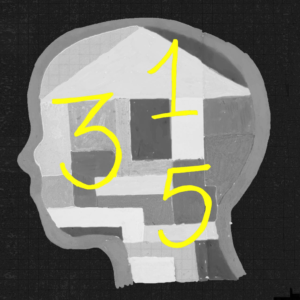
For example, remembering the sequence 3-5-7-6-2-8-1-0-4 as nine separate digits is difficult. However, grouping the numbers into three chunks – 357, 628 and 104 – makes the sequence far easier to recall.
Students can apply chunking by grouping related concepts together during revision, turning multiple pieces of information into a single, meaningful unit. This prevents cognitive overload and frees up mental capacity for learning new material.
4. Spaced repetition
Spaced repetition is a scientifically proven technique that improves long-term retention by prioritising consistency over last-minute cramming.
This method is based on the “forgetting curve”, identified by 19th-century German philosopher Hermann Ebbinghaus, which shows how information fades from memory if it is not revisited.
By reviewing material at strategically spaced intervals, students can reinforce learning and significantly reduce the total time spent revising. For example, students can review the new content right after a lesson, revisit it the following day using active recall, then three days later and again one week later. This would be more effective than reviewing concepts in a big heap the night before the exam.
Although spaced repetition can seem time-consuming, it is far more effective in the long run and helps boost grades while actually shortening revision time.
5. Interleaving
Interleaving is becoming an increasingly popular study method that enhances students’ ability to apply knowledge in unfamiliar situations.

Rather than focusing on a single topic for extended periods, interleaving involves switching between related concepts or subjects during study sessions. For example, between algebra and trigonometry in maths, or between micro- and macro-economics in economics.
This approach helps students identify differences and similarities between ideas, a skill that is especially valuable in exams where students need to distinguish between concepts and apply them flexibly.
Students can practice this method by switching between topics during revision instead of dwelling on the same subject for long hours. The other option is to mix practice questions instead of practising the same format continuously.
Ultimately, effective studying requires a balance between learning new information and applying it. Interleaving theory with practice helps students develop deeper understanding and stronger memory.

Edited by:

© 2026 The Oxford School for the Future