


14-year-old Vivienne from the Armenian Newsroom explains five psychology terms to do with relationships
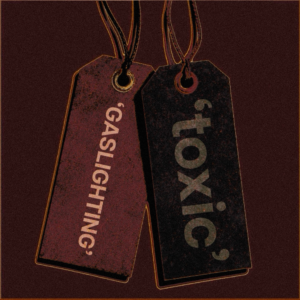
Open TikTok, Instagram or YouTube Shorts for long enough and you’ll probably see someone being called a “narcissist”, accused of “gaslighting” or described as “toxic”. These words can be useful when discussing genuinely harmful behaviour. However, as psychology terms become part of everyday internet language, their meanings can become blurred.
This raises an important question: does social media help young people understand relationships better, or does it turn serious psychological concepts into buzzwords?
Here are five commonly used psychology-related terms and what they actually mean.
View this post on Instagram
Narcissist
Perhaps no psychology term is thrown around online more often than “narcissist”.
In everyday internet conversations, the label is often used to describe anyone who is arrogant and selfish. However, narcissism exists on a spectrum. Having isolated moments of self-centred behaviour does not automatically make someone a narcissist.
Mental health professionals generally use the term to describe a pattern of traits such as an inflated sense of self-importance, a strong need for admiration and a lack of empathy for others. More severe cases may be associated with Narcissistic Personality Disorder, a recognised mental health condition.
This distinction matters because reducing every selfish friend or ex-partner to a narcissist can oversimplify human behaviour and misunderstand a genuine psychological disorder.
Harbingers’ Weekly Brief
Subscribe to the Harbingers’ Weekly Brief, a newsletter written by the editorial board of Harbingers’ Magazine, the world’s youngest newsroom, delivered to your inbox every Monday morning.
![author_bio]()
![author_bio]()


Gaslighting
“That’s gaslighting!” Today, this phrase often appears whenever two people disagree about what happened in a conversation. But genuine gaslighting is far more serious than simply remembering an event differently.
According to psychological definitions, gaslighting involves deliberately trying to make another person doubt their own perception or understanding of reality. It is a pattern of manipulation rather than a single disagreement.
For example, if someone repeatedly denies events that clearly happened, rewrites past conversations and consistently makes another person question their own experiences, that may be gaslighting.
A normal argument where two people sincerely remember an event differently is usually not.
The difference may seem small, but confusing ordinary conflict with psychological manipulation can make it harder to recognise genuine abuse when it occurs.
Toxic
The word “toxic” has become a catch-all label for relationships, friendships, habits and even personality types.
Sometimes the label is appropriate. Experts note that toxic relationships often involve repeated unhealthy patterns of disrespect, manipulation or emotional harm rather than occasional disagreements or mistakes.
However, not every difficult relationship is toxic. Friends can argue. Partners can have bad days. People can make mistakes and still maintain healthy relationships overall.
When every unpleasant interaction is called “toxic”, the term loses its ability to describe genuinely damaging situations.
Trauma
The word “trauma” has become increasingly common online, often being used to describe anything upsetting or stressful.
Yet psychologists generally define trauma more specifically. According to the US government’s National Institute of Mental Health (NIMH), trauma refers to experiences that are perceived as physically or emotionally harmful or life-threatening and that have lasting negative effects on a person’s well-being.
NIMH defines trauma as experiences, such as natural disasters or acts of violence, that can create long-term impacts on emotional, mental, physical or social functioning.
This does not mean everyday struggles are unimportant. Failing a test, losing a friendship or feeling rejected can be deeply painful. But describing every uncomfortable experience as a trauma risks minimising the experiences of people who have survived genuinely traumatic events.
Abusive

Few words carry more weight than “abusive”. However, it has become a catch-all term for behaviour or actions that are considered unpleasant.
Cornell Law School definesabuse as behaviour that causes significant physical, emotional, psychological, sexual or financial harm.
In relationships, abuse often includes patterns of control, intimidation, coercion or repeated harm rather than isolated acts of rudeness or occasional arguments.
Calling every disagreement or mistake “abusive” may make genuine abuse harder to identify. At the same time, dismissing real warning signs can also be dangerous. The challenge is learning where the line actually lies.
How to avoid confusion
Understanding the difference between these terms often comes down to looking at patterns rather than isolated incidents.
What matters is whether someone consistently shows the same harmful dynamics over time, such as repeated self-centred behaviour, ongoing denial of your experiences, cycles of emotional exhaustion or situations where you feel increasingly confused or unable to trust your own reactions.
When these patterns continue, they can affect how someone sees themselves and their relationships. Prolonged exposure to controlling or reality-distorting behaviour can erode emotional stability and a person’s sense of safety, which is why recognising repetition is more important than labelling individual moments.

Edited by:

© 2026 The Oxford School for the Future