


18-year-old Sofiia explains the next steps in NASA’s plans and the possible future of space travel
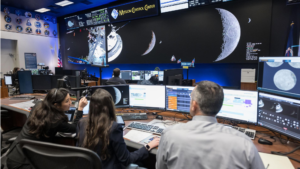
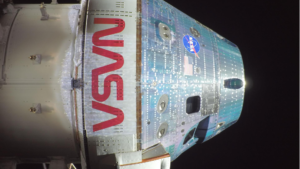
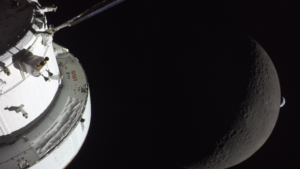
On 1 April, NASA’s Orion spacecraft launched from the Kennedy Space Center in Florida. It carried four astronauts on the Artemis II mission to loop around the far side of the Moon and return to Earth ten days later. Undoubtedly, many families sat down in front of the TV to watch this historical moment.
The mission set a new record for the furthest distance humans have travelled from Earth, reaching 406,771 km (252,756 miles) on 6 April. This exploration represents humanity’s curiosity and striving for space.
Harbingers’ Weekly Brief
Subscribe to the Harbingers’ Weekly Brief, a newsletter written by the editorial board of Harbingers’ Magazine, the world’s youngest newsroom, delivered to your inbox every Monday morning.
![slide image]()
![slide image]()
![slide image]()
![slide image]()
![slide image]()
![author_bio]()
![author_bio]()


Memorable moments included the Artemis ll crew paying tribute to commander Reid Wiseman’s late wife Carroll Taylor Wiseman, by naming a crater after her. “It’s a bright spot on the Moon,” said mission specialist Jeremy Hansen, “And we would like to call it Carroll.”
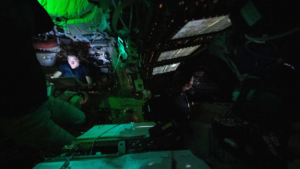
There was some fun too. A moment from the livestream went viral, when a jar of Nutella was seen floating around in the Orion spacecraft. Nutella leaned into the unintentional product placement, posting the video on X with the caption “Honored to have traveled further than any spread in history.”
The Artemis programme is an ongoing series of missions aimed at exploring the Moon. It focuses on establishing a long-term, sustainable presence on the planet and to prepare for future human missions to Mars.
Let’s explore the timeline of what we should expect in the coming years.
Artemis I: Test launch, 2022
In the first mission, the Orion spacecraft spent 25 days in space without docking to a station, longer than any other human-rated ship had achieved at the time. There were no people on board. It was a full-scale test of the hardware meant to take humans back to the Moon, including Orion and the rocket that powers it, known as the Space Launch System (SLS).
Artemis II: First crewed flight, 2026
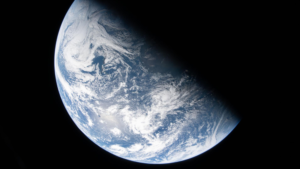
Artemis II was a “crewed lunar flyby”, which means that the crew did not leave the ship and only observed the Moon (and the Earth) from afar. It was the first crewed flight test of the Orion spacecraft and SLS rocket.
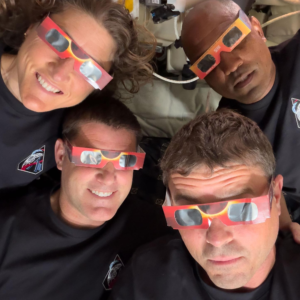
This flight carried four astronauts – pilot and the first person of colour in space Victor Glover; mission specialist and the first woman to travel around the Moon Christina Koch; mission specialist and the first Canadian to travel to space Jeremy Hansen; and the commander Reid Wiseman – to validate systems for future long-term lunar exploration and potential Mars missions.
Artemis II was so important because it marks the first human mission to the Moon in over 50 years, since Apollo 17 in 1972, when astronauts Eugene Cernan and Harrison Schmitt landed on the lunar surface. This was the last time that humans set foot on the Moon.
Artemis III: Commercial spacecraft, 2027
The Artemis III mission, which will stay in low Earth orbit, is meant to test rendezvous and docking capabilities between Orion and other spacecraft that are designed to actually land on the Moon. These are not made by NASA, but by private companies: Elon Musk’s SpaceX and Jeff Bezos’s Blue Origin.
This mission is meant to determine whether commercial flights to space are possible, and potentially map out a timeline for that to happen.
Artemis IV: Crewed Moon landing, 2028
With Artemis IV, the plan is for Orion with its four astronauts to travel to the Moon. Two crew members will land on the lunar surface and spend approximately a week near the planet’s South Pole.
According to NASA, this will be “one of the most complex undertakings of engineering and human ingenuity in the history of deep space exploration”.
Artemis V: Longer Moon landing, late 2028
The goal of Artemis V is to land astronauts again in the South Polar region, this time for longer (three to four weeks). This is the start of NASA establishing a permanent Moon base.
View this post on Instagram
The future of space travel?
Since establishing Artemis, NASA has encouraged competition between private companies such as Blue Origin and Space X to build equipment that can transport people to and from the Moon.
This has sparked curiosity among investors who see space travel as a profitable form of luxury tourism. For example, Voyager Technologies, a US company that produces space infrastructure, is preparing to open a space hotel by 2029. The first few visitors will likely be government-sponsored astronauts and researchers. Fully commercial flights with tourists may be a viable option later.
But what about colonising the Moon? Currently, there is no timeline for this as the technology does not exist.
According to Jim Wertz, president of space mission engineering company Microcosm Inc and professor of astronautics at the University of Southern California , three things need to change.
The cost of transportation has to be cheaper. The mission has to change from a large, science-driven programme to a commercial one, and create a large enclosure on the Moon where most of the equipment used on Earth can still be used within it.
But why are people interested in colonising the Moon? “It does benefit humanity as a whole in several ways. The biggest, by far, is in the potential scenario that Earth becomes uninhabitable”, says Wertz. With the threat of climate change escalating or even a nuclear war, this outcome cannot be ignored.
However, colonising the Moon might not the best idea. Some people warn that if humans expand into space without first correcting our destructive tendencies, we risk treating outer space as landfill.
According to an ethical analysis from the University of Nebraska-Lincoln, humanity could “flood the galaxy like a plague”. It continues: “Unless pollutive practices, destructive agriculture and infrastructure designs, and exploitive ethics are negated,humanity will simply kill planet after planet in its galactic conquest to find a suitable home.”
Humanity is definitely not leaving Earth for good any time soon, but how far can we get while still focusing on the well-being of our planet? Hopefully, our ability to explore space does not cause us to give up on Earth.

Edited by:

© 2026 The Oxford School for the Future