Harbingers’ Magazine is a weekly online current affairs magazine written and edited by teenagers worldwide.
harbinger | noun
har·bin·ger | \ˈhär-bən-jər\
1. one that initiates a major change: a person or thing that originates or helps open up a new activity, method, or technology; pioneer.
2. something that foreshadows a future event : something that gives an anticipatory sign of what is to come.
We and our partners may store and access personal data such as cookies, device identifiers or other similar technologies on your device and process such data to personalise content and ads, provide social media features and analyse our traffic.
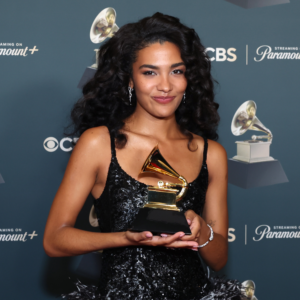
The 68th Grammy Awardsreturned to Los Angeles on Sunday night, transforming the Crypto.com Arena into a mix of celebration, historic wins,emotional tributes, bold fashion and unscripted moments.
Hosted for the sixth consecutive year by Trevor Noah,the ceremony handed out 95 awards across genres. Beyond the awards themselves, artists used the stage to criticise US immigration policy, while many performances leaned noticeably low-key.
‘Big four’ awards
In the most prestigious categories, Latin music, alternative pop and R&B shared the spotlight.
Bad Bunny took home Album of the Year for Debí tirar más fotos (I Should Have Taken More Photos), while Song of the Year went to Billie Eilish and Finneas for ‘Wildflower’.
Record of the Year was awarded to Kendrick Lamar and SZA for their collaboration Luther, and Best New Artist went to British soul singer Olivia Dean.
Subscribe to the Harbingers’ Weekly Brief, a newsletter written by the editorial board of Harbingers’ Magazine, the world’s youngest newsroom, delivered to your inbox every Monday morning.
See you on Monday!
Ooops - please try again.
Immigration politics take centre stage
For several artists, the stage doubled as a political platform. Accepting Album of the Year, Bad Bunny opened bluntly: “Before I thank God, I want to say: ICE out!”
“We’re not savages, we’re not animals, we’re not aliens. We are human beings, and we are Americans,” he said, criticising the US Immigration and Customs Enforcement agency.
Billie Eilish echoed the sentiment while accepting Song of the Year, declaring: “No one is illegal on stolen land,” a reference to Indigenous displacement in the US.
Earlier in the night, Trevor Noah jokingly asked if he could relocate to Puerto Rico if conditions in the US worsened. Bad Bunny replied: “Puerto Rico is part of America”, prompting applause.
Several stars wore ‘ICE Out’ badges on the red carpet, including Justin Bieber, Hailey Bieber and Joni Mitchell, while performers such as Kehlani and Gloria Estefan voiced support for immigrant communities.
The night featured high-profile sets from Gaga, Rosé alongside Bruno Mars, Sabrina Carpenter, and Tyler, The Creator, plus a tribute to Ozzy Osbourneled by Post Malone.
Yet despite the star power, many performancesfelt rushed and lacked the spectacle typically associated with the Grammys. This was particularly true for sets from the Best New Artist nominees, which some viewers described as surprisingly low-key.
While many acts leaned on spectacle, Justin Bieberwent the opposite direction, offering a quiet, stripped-back performance that felt closer to a bedroom session than an arena show.
Fashion: black suits and ‘naked dresses’
On the red carpet, two trends dominated: restraint and revelation.
Many male artists opted for classic black tailoring, with few risks beyond the occasional statement jacket. In contrast, several women embraced sheer fabrics and “naked dresses”, continuing the barely-there couture trend that has come to define recent awards seasons.
Singer Chappell Roan drew particular attention with an avant-garde look that quickly became one of the most discussed outfits of the night.
If the Grammys aim to balance spectacle with cultural relevance, this year’s ceremony certainly delivered the latter. Political statements and social commentary felt urgent and authentic but, musically, the show sometimes struggled to match its own expectations. The result was a night that felt historic in message, if not always memorable in performance.
Born in 2009 in Budapest, Hungary, Lola has lived in Budapest and California, US. She is interested in music, pop culture, politics, and mental health, and plans to study psychology.
Lola joined Harbingers’ Magazine in the summer of 2024 as a contributor during the Oxford Pop-up Newsroom. After completing the newsroom and the Essential Journalism Course, she became a writer in the autumn of the same year, covering society and public affairs. Her strong writing skills and dedication to the magazine led to her promotion to Society Section Editor in 2025.
In her free time, Lola plays guitar, piano, and volleyball, enjoys going to concerts, and creates various types of studio art. She is also a fan of Taylor Swift’s music.
Lola speaks English, Hungarian, French, and Spanish.
music
🌍 Join the World's Youngest Newsroom—Create a Free Account
Sign up to save your favourite articles, get personalised recommendations, and stay informed about stories that Gen Z worldwide actually care about. Plus, subscribe to our newsletter for the latest stories delivered straight to your inbox. 📲
We use cookies to ensure that we give you the best experience on our website. If you continue to use this site we will assume that you are happy with it.