Harbingers’ Magazine is a weekly online current affairs magazine written and edited by teenagers worldwide.
harbinger | noun
har·bin·ger | \ˈhär-bən-jər\
1. one that initiates a major change: a person or thing that originates or helps open up a new activity, method, or technology; pioneer.
2. something that foreshadows a future event : something that gives an anticipatory sign of what is to come.
We and our partners may store and access personal data such as cookies, device identifiers or other similar technologies on your device and process such data to personalise content and ads, provide social media features and analyse our traffic.
When I was 14 years old, my Catholic high school hosted a careers fair.
As a young girl, I was given a choice of attending two talks: how to become a mother, or how to become a nun. For the first time, I began to realise that my school had a very different idea of what a young woman’s future should look like from my own.
Looking back now, the signs had been there long before I finally noticed them.
When first entering high school, I didn’t question its values and beliefs. Instead, I fully embraced the religious environment and particularly enjoyed attending morning prayers and Bible classes, and even wearing the school uniform – a special cloak that students put on over their normal clothes.
Although the main reason I started attending a religious school was simply its proximity to my home, I soon found comfort in feeling like I belonged to a community where people seemed to see the world through the same lens as me – or so I thought.
Harbingers’ Weekly Brief
Subscribe to the Harbingers’ Weekly Brief, a newsletter written by the editorial board of Harbingers’ Magazine, the world’s youngest newsroom, delivered to your inbox every Monday morning.
See you on Monday!
Ooops - please try again.
One of the first times I began to question that sense of belonging was on an incredibly hot summer day when the school allowed us to not wear our uniforms. Since it was so hot, I decided to wear a tank top, but was told to immediately change back into my uniform.
I asked my teacher why the school had such strict rules around clothing. She explained that the dress code existed so that boys and male teachers would not find female students’ clothing distracting.
That answer made me question what the uniform truly represented. I had once seen it as a symbol of belonging to the school. Now it was being used to control what female students could wear, based on how boys and men might react to our bodies.
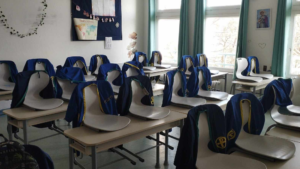
The school uniform that students wear over their normal clothes.
But when I questioned this reasoning aloud, my teacher simply told me to “stop talking back to her and follow the rules instead”.
This experience made me pay closer attention to the emphasis my school placed on conformity. I began to notice it not only in its rules, but also in the classroom.
During classes we were always expected to memorise large amounts of information rather than reflect on or question what we were being taught. In maths, for example, following memorised solutions often seemed more important than finding our own ways of solving a problem.
Gradually, I began to feel that following established rules and methods was encouraged, while questioning them was treated as disruptive.
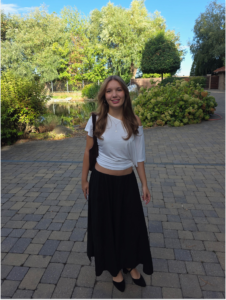
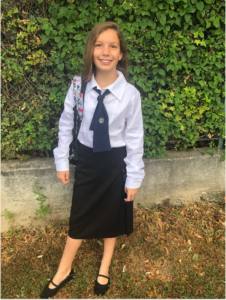
Viola’s outfit for the opening ceremony of her first year in high school.
At first, this left me feeling isolated. I often wondered whether I was the only person who saw anything wrong with what was happening around me.
Learning more about social sciences outside of school helped me feel less alone with my perspective. I began reading about social inequalities, feminism and discrimination, and realised that some of the experiences that had made me uncomfortable were connected to much broader questions about gender and power.
Reading books that were not on the school curriculum, such as Mapping the Margins by Kimberle Crenshaw, also broadened my perspective by showing me how overlapping systems of oppression, such as sexism and racism, can make Black women’s experiences more complex than my own. This introduced me to inequalities and forms of discrimination that I had never personally encountered.
I began learning more about racism and about discrimination against LGBTQ+ people, and became more aware of prejudices that I had previously failed to recognise around me. Once I had learned to recognise them, remaining silent became much harder.
When my classmates talked about how “being gay is sinful”, I challenged their assumption by asking them how love could be a sin, while also reminding them that judging others, according to the Bible and our school’s priest, is considered immoral – if we’re going to talk about sins.
On another occasion, after one of my teachers made an openly racist statement, claiming that “black people can’t swim”. I respectfully explained why such stereotypes are harmful and pointed out that there is no correlation between people’s skin colour and their physical capabilities.
Speaking up suddenly made me doubt whether I had ever truly belonged at my school. There were many times when I wished I had never applied there in the first place. But gradually, I became less afraid of questioning what I believed was unfair, even when doing so meant disagreeing with teachers or classmates.
When I arrived at the school, belonging meant attending morning prayers, wearing my uniform and sharing the same values with the people around me, but after a while I began to understand belonging differently.
I may not have become the kind of student my school expected me to be, but I became more certain about the kind of person I wanted to be: someone who is willing to question injustice, stand up for others and myself, and refuses to be silenced for speaking up.
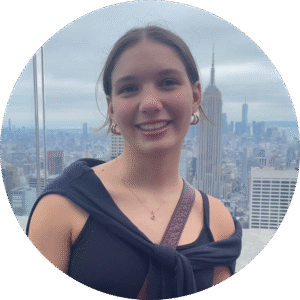
Born in 2008 in Budapest, where she still lives and studies, Viola is interested in journalism, pop culture, international relations and psychology.
In her free time, she plays piano, dances and enjoys daydreaming while listening to music. She also loves taking long walks in the countryside with her dogs.
Viola speaks English, Hungarian, French and German.
🌍 Join the World's Youngest Newsroom—Create a Free Account
Sign up to save your favourite articles, get personalised recommendations, and stay informed about stories that Gen Z worldwide actually care about. Plus, subscribe to our newsletter for the latest stories delivered straight to your inbox. 📲
We use cookies to ensure that we give you the best experience on our website. If you continue to use this site we will assume that you are happy with it.