Harbingers’ Magazine is a weekly online current affairs magazine written and edited by teenagers worldwide.
harbinger | noun
har·bin·ger | \ˈhär-bən-jər\
1. one that initiates a major change: a person or thing that originates or helps open up a new activity, method, or technology; pioneer.
2. something that foreshadows a future event : something that gives an anticipatory sign of what is to come.
We and our partners may store and access personal data such as cookies, device identifiers or other similar technologies on your device and process such data to personalise content and ads, provide social media features and analyse our traffic.
The recent allegations that a female student was sexually assaulted by seven male students at Cornell University, a private Ivy League college in Ithaca, New York, has reshaped how my female friends and I think about university.
Alongside courses, school spirit and campus life, we are now forced to consider the unsettling question of whether our colleges will stand beside us if something happens. The possibility of assault and abuse is a very real one, but my classmates and I were under the presumption that we would be protected, especially by sexual misconduct policiesat universities.
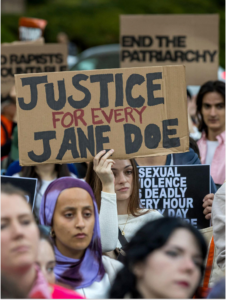
A Cornell student – anonymised as Jane Doe – alleged that she was sexually assaulted on 19 October 2024 by seven members of the university’s Chi Phi fraternity. (Fraternities and sororities are private student organisations common at US universities.)
Doe, who was visibly intoxicated, says she was pushed by a friend and another fraternity member into snorting ketamine and was given more alcohol. She alleges that she was then taken into another room in the house, where seven fraternity members sexually assaulted her over seven hours, until 5.45am on 20 October.
She reported the assault to Cornell University Police on 8 November. However, district attorney Matthew Van Houten did not open a criminal investigation, basing that decision on a six-page statement that left out key information, according to Doe’s lawyer.
Harbingers’ Weekly Brief
Subscribe to the Harbingers’ Weekly Brief, a newsletter written by the editorial board of Harbingers’ Magazine, the world’s youngest newsroom, delivered to your inbox every Monday morning.
See you on Monday!
Ooops - please try again.
None of the seven male students – known as the ‘Cornell 7’ – were charged with a crime. Two were expelled, while five received lesser disciplinary measures, including writing an essay, attending workshops or suspension. Some of the men continue to attend Cornell. Doe left the university. The university also banned the fraternity.
After Doe filed a civil lawsuit against the university in September, the case is now being reopened by New York prosecutors. While this renewed investigation offers another opportunity for accountability, it also raises an uncomfortable question: why did it take a lawsuit and national backlash for the case to receive reconsideration?
Whose future gets protected?
What troubles me most is the possibility that a university may be more concerned with preserving the futures of its male students than confronting the terrible harm they may have caused. Even while the allegations remain subject to legal proceedings, protecting the rights of an accused student should not mean treating a complainant’s safety, education or future as secondary.
It is clear that the leaders of these institutions place great importance on their students’ future trajectories. But just as a suspension or expulsion can alter someone’s life, so can sexual violence.
The fear of disrupting a promising young man’s future should never eclipse concern for a young woman’s ability to come forward.
The institutional priorities raise serious questions about whether these systems are more willing to preserve male potential and reputation than demand justice for women. Some 35% of undergraduate women at Cornell surveyed in 2025 reported experiencing non-consensual sexual contact involving force or incapacitation.
However, the problem extends beyond one university and points to a wider pattern of institutional neglect. Jane Doe has also spoken out about what she sees as a pattern of leniency towards men, not only at Cornell, but in the wider Ivy League community.
In New York state, only around 1% of sexual violence allegations between 2018 and 2024 resulted in expulsion for students or dismissal of university faculty, while another 2% resulted in suspension. This data is available because state law requires universities to disclose incidents involving sexual assault.
The situation at Cornell is far from new: other universities have faced scrutiny over their dealing of cases of sexual assault. However, it has drawn international attention because it raises questions of institutional neglect at an Ivy League university, one of the most respected symbols of higher education.
This incident represents a gap between the prestige of an institution and the protection it offers its students. It is important to note that the story was revealed not by the university itself, but by Cornell’s newspaper, The Cornell Daily Sun, which is run by Cornell students but is financially and editorially independent of the university.
This distinction reveals another problem about accountability: students should not have to rely on their peers to seek change or demand justice. Even though involving other students can bring allegations to light, it cannot provide the protections that a university is responsible for delivering – and it shouldn’t have to.
The burden should not fall on a young woman to choose between the education she deserves and the protection she needs. No high school student should have to wonder whether being safe from sexual violence will come at the cost of their education when choosing a college.
Students should not have to rely on public outrage, national attention or pressure from their classmates before their concerns are taken seriously.
Stephanie Kwok, born in 2009 in Hong Kong, joined Harbingers’ Magazine in November 2025 as the overall winner of the Harbingers Prize 2025. After completing the writing course, she became a regular writer for the magazine.
Her strong writing and editorial engagement led to her appointment as South Asia Editor for 2026, a role she took up on 1 March. In this position, she helps coordinate reporting and contributions from the region.
Stephanie lives and studies in Hong Kong and is an aspiring journalist and writer. She is particularly interested in investigative journalism, English literature and classics.
She is also a contributing writer for several publications, including Polyphony Lit and FilmPsych, and enjoys writing poetry in her free time.
Stephanie speaks English, Cantonese, Mandarin and Shanghainese, and is currently learning Latin.
🌍 Join the World's Youngest Newsroom—Create a Free Account
Sign up to save your favourite articles, get personalised recommendations, and stay informed about stories that Gen Z worldwide actually care about. Plus, subscribe to our newsletter for the latest stories delivered straight to your inbox. 📲
We use cookies to ensure that we give you the best experience on our website. If you continue to use this site we will assume that you are happy with it.