

17-year-old Malena provides an overview of US–Latin American relations during Trump’s second term
Since the Trump administration has been running the show, there has been a 360° shift in diplomatic relations. The Monroe Doctrine, a policy position that opposes any foreign interference in the western hemisphere, has made its comeback under the Republican government, and was used to justify intervention in Venezuela and Cuba earlier this year.
The United States has a complex relationship with Latin America. In 2026, it is marked by energy integration, infrastructure investment and policy considerations related to migration, drug trafficking and security, all of which influence capital flows and investment decisions.
But some critics argue that the US behaves as if Latin America is its backyard, and that this leads it to violate international law. Some countries in the region are feeling the tension, and their relations can be categorised as apprehensive, friendly or neutral.
Harbingers’ Weekly Brief
Subscribe to the Harbingers’ Weekly Brief, a newsletter written by the editorial board of Harbingers’ Magazine, the world’s youngest newsroom, delivered to your inbox every Monday morning.
![slide image]()
![author_bio]()


Apprehensive
President Trump ordered troops to capture Venezuela’s leader, Nicolás Maduro, and his wife on 3 January 2026. The move has reinforced Trump’s determination to assert US dominance in the western hemisphere, while also carrying an implicit promise of a new democratic Venezuela.
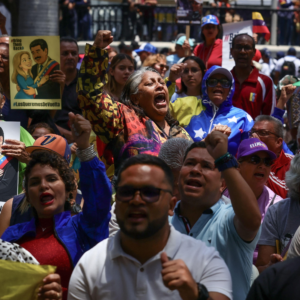
In response, Cuba, Nicaragua, Mexico and Colombia have shown a united front in solidarity with the Venezuelan regime.
It is no secret that Cuban president Miguel Díaz-Canel and Trump are on bad terms. US-Cuba tensions are at an all-time high as the US claims that Cuba’s cooperation with Russia and China could pose a threat.
On the day of his inauguration, Trump reinstated Cuba to the list of state sponsors of terrorism. In March, the US revoked temporary legal status for more than half a million migrants from Cuba, Haiti, Nicaragua and Venezuela.
The Trump administration also threatened tariffs on goods from third countries that sell oil to Cuba, such as Venezuela. This forced the Cuban government to take emergency measures to address fuel shortages during what experts call the island’s worst economic and energy crisis in decades.
Nicaragua and the US have heavily strained relations, which have worsened under the administration of President Daniel Ortega. In June, the US imposed travel bans on more than 100 Nicaraguan officials for violations of human rights.
Colombia’s president Gustavo Petro has also condemned the US’s actions, while relations with Trump remain rocky over drug policy and military operations in the Caribbean Sea.
Brazil’s president Luiz Inácio Lula da Silva stated that the US actions in capturing Maduro “crossed an unacceptable line”, comparing them to “the darkest moments of [US] interference in Latin America and the Caribbean”. Tensions have been high between both countries since Trump imposed a 50% tariff on Brazilian goods and sanctioned officials over the prosecution of former Brazilian president Jair Bolsonaro.
View this post on Instagram
Friendly
In a shocking turn of events, Venezuela, under interim president Delcy Rodríguez, has shown itself to be under pressure to change its diplomatic relations with the US and encourage more economic cooperation.
As of 2026, both countries have agreed to re-establish diplomatic relations and make joint efforts to promote stability, support economic recovery and advance political reconciliation. The US embassy in Caracas, which closed in 2019, has been reopened, and a new diplomat has been appointed in Venezuela.
The US relies on public support from several Caribbean jurisdictions that have backed Trump, including Trinidad and Tobago, the Dominican Republic, Grenada and the US territories of Puerto Rico and the US Virgin Islands.
Argentina’s government under Javier Milei considers the US and Israel its central partners in geopolitical matters and has positioned itself in their favour, even describing Iran as an “enemy” of Argentina.
El Salvador’s relationship with the United States has been characterised by an asymmetrical integration into US-led accumulation patterns and security regimes, from the Cold War to the “war on drugs” and “war on terror”.
Salvadoran president Nayib Bukele cultivated close ties with the first Trump administration and signed an agreement to make El Salvador a “Safe Third Country” for migrants seeking asylum in the US.
In addition, Bukele rented his prisons to the Department of Homeland Security and opened his airfields to US attack planes. Court filings have confirmed that the White House paid El Salvador $4.7m to detain men on behalf of the US.
Under its new right-wing president, José Antonio Kast, relations between Chile and the US are shifting toward closer alignment. The Trump administration is prioritising securing critical minerals such as lithium and copper and reducing dependence on China, using the US-Chile Free Trade Agreement.
Neutral
Other countries have remained neutral regarding the more aggressive US foreign policy agenda pursued by the Trump administration.
Costa Rica aligns with US security and migration policies to maintain economic ties, as the US buys around 40% of Costa Rica’s exports. Recently, the Costa Rican government agreed to receive up to 25 deported migrants a week from the US.

Trump also plansto designate Peru a major non-NATO ally, part of his outreach to Latin America and his drug-fighting agenda. Regardless, the tone is patronising. The US has also warned Peru about China’s influence over its sovereignty and critical infrastructure.
Following tensions over the Panama Canal in 2025, Panama signed a security agreement with the US and exitedChina’s Belt and Road Initiative. Panamanian president José Raúl Mulino also held a bilateral meeting with US secretary of state Marco Rubio, who said the Trump administration maintains a “respectful relationship with Panama” and recognises it as a strategic ally.
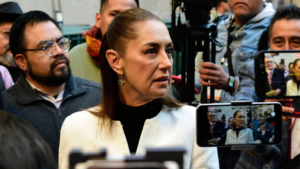
Mexico has reiteratedits opposition to Washington’s intervention and has maintained a non-interventionist stance in Venezuela’s affairs. President Claudia Sheinbaum is attempting to maintain a good relationship with the US while rejecting foreign intervention in Latin America.
That is also true for trade. When the US imposed a 25% tariff on most imports from Mexico, driven by disputes over border security and drug trafficking, Mexico was able to cautiously align with Trump’s trade policy without sacrificing its sovereignty.
Relations between the US and Latin America are changing on a daily basis. They still share a table at the Organisation of American States (OAS) and have multiple bilateral agreements for trade and investment. People in both regions are linked through immigration, the history of their independence and cultural ties. Regardless, the Trump administration is not afraid of burning bridges with stronger allies such as Canada and the European Union. Why would Latin America be treated any differently?

© 2026 The Oxford School for the Future