Harbingers’ Magazine is a weekly online current affairs magazine written and edited by teenagers worldwide.
harbinger | noun
har·bin·ger | \ˈhär-bən-jər\
1. one that initiates a major change: a person or thing that originates or helps open up a new activity, method, or technology; pioneer.
2. something that foreshadows a future event : something that gives an anticipatory sign of what is to come.
We and our partners may store and access personal data such as cookies, device identifiers or other similar technologies on your device and process such data to personalise content and ads, provide social media features and analyse our traffic.
For as long as I can remember, I have dreamed of being a mother.
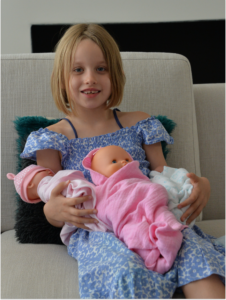
I would cradle my baby dolls, imagining that one day I would be holding a baby of my own.
One day, a friend told me that having children young would mean completely giving up my own life. They said that I should “live my life” before choosing to have children. That brings me to the question: what does “living life” really mean?
Some people see their future in a big house with children’s laughter echoing down the hallway. Others see a passport brimming with stamps, a life filled with independence, and a fulfilling career before they even think of having children.
Neither is the wrong choice, and they are not necessarily mutually exclusive. We must stop pretending there is only one correct path in life.
As Sofia Vorobei wrote in a recent article for Harbingers’ Magazine, parenthood is increasingly becoming a choice rather than an expectation for Gen Z.
But if parenthood is truly a choice, shouldn’t choosing to become a mother young be respected as well?
For many young people, waiting to have children makes sense. Graduating from university, finding the right partner, travelling and becoming financially independent can all feel like milestones to reach before becoming a parent. It’s completely understandable, but why do we treat travelling and building a career as “experiencing adulthood”, but not raising a family?
The age at which women first become mothers has been on the rise since the 1970s. According to UK government data, in 1990, women in England and Wales had their first child at an average age of 25.5 years. In 2020, that age had risen to 29, an increase of almost four years in three decades.
Having adequate finances also shapes whether young people feel able to start a family. In Switzerland, where I live, having children is expensive. A two-child family can face net childcare costs equivalent to 35% of average earnings after benefits and tax, according to the Organisation for Economic Co-operation and Development (OECD).
Harbingers’ Weekly Brief
Subscribe to the Harbingers’ Weekly Brief, a newsletter written by the editorial board of Harbingers’ Magazine, the world’s youngest newsroom, delivered to your inbox every Monday morning.
See you on Monday!
Ooops - please try again.
For some women, then, the question may not be “Do I really want to have children young?,” but “Can I afford to give them the stable lives they deserve?”
I understand why many women do not want to become young mothers. Parenthood is an enormous responsibility that requires sacrifices in one’s social life, ability to travel and sense of spontaneity.
It also isn’t simply about wanting to have a baby: it’s about having emotional maturity, financial stability and an adequate support network. As the saying goes, “it takes a village to raise a child.”
Nonetheless, I do not believe that being young automatically makes someone incapable of being a good parent.
For me, one attraction of becoming a young mother is the idea of growing alongside my children and having the energy to share more of their lives with them. I also don’t think you need to have everything in your life figured out before becoming a mother. Parenthood itself requires you to learn and adapt as your children grow.
My mum has always told me that the days my three siblings and I were born were the happiest four days of her life. I want to experience that joy myself.
I do not believe there is one universally correct age or path to motherhood. For some, motherhood has always been a dream, and becoming a young mother represents fulfillment and purpose. For others, it may feel more important for them to improve their financial security, build a strong support system or simply wait until they feel emotionally ready.
“Living life” does not have a single meaning. Travelling, building a career, pursuing personal growth and becoming a mother can all be meaningful ways of experiencing adulthood. If my generation has the freedom to decide whether and when to become parents, choosing motherhood young should be respected too.
Maya is a student in the canton of Valais, Switzerland. Born in 2011, she has a keen interest in music, pop culture, politics and psychology, and hopes to study law or psychology in the future. For Harbingers’ Magazine, she writes about politics, psychology and society.
In her free time, Maya enjoys playing a range of musical instruments, going for walks outdoors and reading.
She is also an active participant in her school’s Model United Nations programme and is consistently involved in the school’s end of year performances, contributing both on stage and behind the scenes.
Her passion for music has led her to achieve an excellent result in Grade 5 ABRSM Music Theory.
🌍 Join the World's Youngest Newsroom—Create a Free Account
Sign up to save your favourite articles, get personalised recommendations, and stay informed about stories that Gen Z worldwide actually care about. Plus, subscribe to our newsletter for the latest stories delivered straight to your inbox. 📲
We use cookies to ensure that we give you the best experience on our website. If you continue to use this site we will assume that you are happy with it.