logo

Harbingers’ Magazine is a weekly online current affairs magazine written and edited by teenagers worldwide.

harbinger | noun

har·​bin·​ger | \ˈhär-bən-jər\

1. one that initiates a major change: a person or thing that originates or helps open up a new activity, method, or technology; pioneer.

2. something that foreshadows a future event : something that gives an anticipatory sign of what is to come.

cookie_image

We and our partners may store and access personal data such as cookies, device identifiers or other similar technologies on your device and process such data to personalise content and ads, provide social media features and analyse our traffic.

2 January 2026

Should politicians have to prove their emotional intelligence?

author_bio
Irma Mecele in Vilnius, Lithuania

Article link copied.

slide image

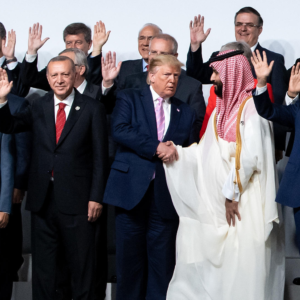
Leaders group picture at the G20 Summit in Osaka, Japan, 2019.

Picture by: dpa | Alamy

When we elect our leaders, we entrust them with enormous power, yet we rarely know whether they possess the emotional intelligence and maturity required to use it responsibly.

Leaders who cannot manage their own emotions often misread threats, lash out impulsively or choose confrontation over diplomacy. This kind of ego-driven leadership fuels global conflict, domestic division and public distrust.

In a world where war can be sparked by a single reckless command, emotional intelligence (also known as “emotional quotient” or EQ) is a safeguard against disaster.

In an age of instability, nuclear threats, misinformation and polarised societies, emotional intelligence is no longer a soft skill. It is a national security priority. Leaders who cannot regulate their emotions, empathise with the public or navigate conflict thoughtfully are far more likely to make decisions that escalate crises rather than resolve them.

A true leader should embody the core pillarsof EQ: self-awareness, self-regulation, empathy, motivation and social skills.

This is why I believe that EQ testing should be mandatory for all presidential candidates. Voters deserve proof that those seeking the country’s highest offices are mentally and emotionally prepared for its responsibilities.

A high score signals a leader who can listen, negotiate, communicate clearly and consider diverse perspectives before acting. It reassures the public that power will be exercised with restraint, humanity and foresight.

Of course, EQ alone can not guarantee peace or stability. But research consistently shows it is one of the strongest predictors of responsible and ethical leadership. A 2025 review analysing 101 empirical studies spanning three decades found that leaders with higher emotional intelligence consistently demonstrate more effective leadership and stronger rational behaviours. The data is clear: emotional competence is not optional.

According to the Pew Research Center in 2024, less then a quarter of Americans trust the federal government. The 2025 Edelman Trust Barometer finds that approximately seven out of ten respondents believe government leaders (as well as business executives and journalists) deliberately mislead the public. However, research shows that business leaders who demonstrate empathy increase engagement by 76%, emphasising how emotionally intelligent leadership can strengthen trust with the public.

Examples from history

However, EQ alone is not enough, it must also be rooted in ethics. Compassion without integrity is sentimentality, and influence without conscience is manipulation. History proves this point.

Nelson Mandela, for example, managed to combine emotional intelligence with an ethical approach to the future. He emerged after 27 years in prison without bitterness, choosing reconciliation over revenge and guiding South Africa towards a negotiated end to apartheid. Mahatma Gandhi led one of the most consequential non-violent movements in history, demonstrating extraordinary self-discipline, empathy and moral conviction.

Their leadership shows how emotional intelligence can unite fractured nations and expand humanity’s moral imagination.

On the other hand, history also warns us that emotional influence detached from ethics can be catastrophic. Adolf Hitler’s charisma and oratory skills demonstrated that emotional manipulationis not emotional intelligence. Lacking empathy and self-awareness, he weaponised emotion to disastrous effect. True EQ requires compassion, integrity and moral grounding.

Critics may argue that not all successful leaders were highly emotionally intelligent. Figures such as Winston Churchilland Margaret Thatcherwere driven more by determination and conviction than empathy. Their courage and strategic capabilities were vital in their eras. But leadership has evolved: in today’s interconnected world, success depends on collaboration, cross-cultural understanding and the ability to manage complex social tensions.

I believe that a modern leader should combine Churchill’s courage, Thatcher’s conviction and Mandela’s empathy.

My proposal is simple: EQ testing should become a global standard. If nations required their political candidates to demonstrate emotional readiness for leadership, diplomacy would become more attainable and peaceful change more realistic.

Emotional intelligence will not solve every crisis. But without it, every crisis becomes harder to solve.

Written by:

author_bio

Irma Mecele

Writer

Vilnius, Lithuania

Born in 2009 in London, UK, Irma studies in Vilnius, Lithuania. She is interested in history, politics and the environment, and plans to study economics. For Harbingers’ Magazine, she writes about politics, culture and society.

In her free time, Irma plays tennis, piano and other sports like karate and boxing. She also enjoys learning languages, travelling and singing. She is proud of finishing a Columbia University program, completing an internship at the EU and taking part in the ‘Voice Kids of Spain’.

Irma speaks Russian, English, Spanish and studies French and Lithuanian.

Edited by:

author_bio

Charlotte Wejchert

Human Rights Section Editor 2025

Warsaw, Poland

opinion

🌍 Join the World's Youngest Newsroom—Create a Free Account

Sign up to save your favourite articles, get personalised recommendations, and stay informed about stories that Gen Z worldwide actually care about. Plus, subscribe to our newsletter for the latest stories delivered straight to your inbox. 📲

Login/Register