


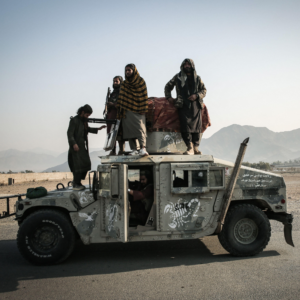
15-year-old Elaha from the Afghanistan Newsroom explains why worsening relations between the two countries are a cause for concern
Increasing border clashes between Afghanistan and Pakistan are raising serious concerns about regional security and long-term stability.
In recent months, relations between the two countries have worsened due to cross-border attacks, political disagreements, economic struggles and the effects of international sanctions. These tensions are especially visible in areas near the border – where ordinary people are facing growing fear and uncertainty.
“Every time there is fighting, we do not know if we will be safe the next day,” an Afghanistani civilian living near the border told Harbingers’ Magazine. “We do not want conflict. We just want a peaceful life,” said another local.
Harbingers’ Weekly Brief
Subscribe to the Harbingers’ Weekly Brief, a newsletter written by the editorial board of Harbingers’ Magazine, the world’s youngest newsroom, delivered to your inbox every Monday morning.
![author_bio]()
![author_bio]()


One of the main causes of tension is the long-standing dispute over the Durand Line, the 2,600 km land border between the two countries, which was created by the British in 1893. Pakistan accepts it as the official border, but Afghanistan has never fully recognized it. This disagreement has caused mistrust between the two countries for many years.
The presence of militant groups on both sides of the border remains a serious issue. Both countries blame each other for not controlling these groups, which increases tension and makes cooperation more difficult.
Earlier this year, clashes and airstrikes increased along the border. Both countries accuse each other of supporting harmful groups and crossing into each other’s territory. These actions have increased the risk of further conflict.
View this post on Instagram
Civilians are the ones who suffer the most. Many families in border provinces such as Kunar (in Afghanistan) and Balochistan (in Pakistan) have been forced to leave their homes because of the violence. “
According to UNHCR, the United Nations Refugee Agency, more than 115,000 people in Afghanistan and 3,000 in Pakistan have been forced to flee from border areas because of airstrikes and fighting.
We had to leave everything behind and move to a safer place,” said one displaced resident. Another said, “Our children cannot go to school, and we are always worried about our future.”
Local traders are also affected. “When the border closes, we lose our income. It becomes very hard to support our families,” a trader told the BBC World Service.
The ongoing conflict has disrupted trade between the two countries. Border closures and strict security checks have caused financial losses and increased poverty in border areas.

International sanctions on Afghanistan have made the situation worse. These restrictions limit economic growth and make it harder for the country to recover, which also affects relations with Pakistan.
The international community has shown concern about the situation. Organisations such as the United Nations and UNICEFare asking both countries to stop fighting and protect children and families. Other countries, including Qatar and Turkey, are also trying to help them enter peace talks.
According to a Ibraheem Bahiss,a senior analyst with the International Crisis Group in Kabul, “Lasting peace between Afghanistan and Pakistan depends on dialogue and cooperation. Without trust, tensions will continue.”

Edited by:

© 2026 The Oxford School for the Future