




21-year-old Ghutai from the Afghanistan Newsroom explains how girls are expressing themselves through art, despite the Taliban
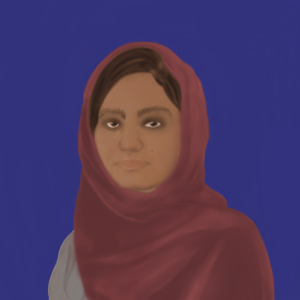
In a quiet room in Kandahar, 16-year-old Shahnaz* sits by a window, her sketchbook open across her knees. With no paints or brushes, she draws with a pencil – of gardens she’s never seen, where girls are walking freely, their faces filled with dreams.
“I draw my difficulties on paper, because in real life no one helps me with them,” she says. “No one is here to support me.”

Under Taliban rule, artistic expression for girls like Shahnaz has become nearly impossible. Since the Taliban took over Afganistan in August 2021, they have barred more than 1.4 million girlsfrom secondary education, shut down art schools and banned most public cultural activities for women.
Kandahar, Afghanistan’s second-largest city, is in southern Afghanistan where restrictions are even tighter than in Kabul and other parts of the country. Yet even here, some girls still quietly create – in secret and often in fear. For them, art isn’t a hobby. It’s a form of survival.
Their drawings often portray longing: open spaces, bright skies, books, birds and faces not hidden behind veils. These images speak of freedom, identity and resilience. Yet few ever see their work. Without encouragement or access to supplies, many young girls give up before they’re even given a chance.
“I was very interested in drawing and painting,” says Marwa*, aged 17. “But no one supported me. People always told me my art was worthless. Finally, I left it behind.”
Families, influenced by fear and tradition, often discourage artistic expression. Some worry art distracts from ‘proper’ responsibilities, while others fear judgement or punishment. Supplies such as paints, brushes and canvas are hard to find and harder to afford. In many cases, girls draw in hidden notebooks, using pencils or scraps of charcoal.
“Paint brushes are expensive,” Shahnaz says. “Sometimes I use food colouring or make-up to paint.”
According to Human Rights Watch (2024), the Taliban’s cultural restrictions have silenced nearly all public art by women. Girls who defy these limits risk community backlash or worse.
Community reactions remain mixed. Some quietly admire the girls’ work; others dismiss it as un-Islamic or unimportant. In a society where women’s voices are muted, many don’t see the value of what these girls are expressing.
However, some educators see the power in their creativity. “I worry about these girls,” says Jina Suliman*, a former art teacher who now teaches in secret. “They could build a better future for our country if we only supported them. Their art is not just art – it’s hope.”
Harbingers’ Weekly Brief
Subscribe to the Harbingers’ Weekly Brief, a newsletter written by the editorial board of Harbingers’ Magazine, the world’s youngest newsroom, delivered to your inbox every Monday morning.
![author_bio]()


The girls continue to draw and paint in secret. Despite the silence and the fear, they create. Their drawings are not just images, they are quiet protests, stories of survival told through shape and colour. In the absence of rights, their art becomes their voice. In the absence of recognition, it becomes their strength.
These hidden artists of Kandahar are more than girls with pencils. They are witnesses, dreamers and quiet revolutionaries. Supporting them isn’t just about giving them brushes, it’s about giving them the freedom to imagine and the confidence to know that their stories matter.
* Names have been changed to protect identities
© 2026 The Oxford School for the Future