



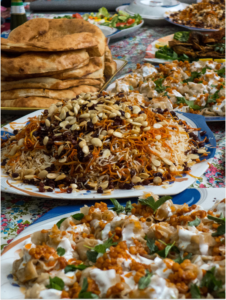
17-year-old Mahwa from the Afghanistan Newsroom explains how food is central to her country’s culture and traditions
Food is never just about sustenance. Across cultures, it carries the weight of history, memory and identity. Every dish tells a story – of migration, trade, struggle and celebration. To sit at a table is to be part of a narrative much older than ourselves, a narrative written not in words but in flavours and aromas.
From Italy’s pasta to Japan’s sushi, from Mexico’s tortillas to Morocco’s tagine, cuisines everywhere reflect the journeys of people and the blending of traditions. Spices crossed seas, grains moved along trade routes, and techniques travelled with families who carried them into new lands.
Ultimately, the language of food is universal. It tells us who we are, where we have been, and how we connect to others.
Harbingers’ Weekly Brief
Subscribe to the Harbingers’ Weekly Brief, a newsletter written by the editorial board of Harbingers’ Magazine, the world’s youngest newsroom, delivered to your inbox every Monday morning.
![author_bio]()



Afghanistani cuisine is a vivid example of this cultural dialogue. At the heart of Central Asia, Afghanistan has long been a crossroads where empires, caravans and travellers passed through. Its food reflects that history – drawing from Persian, Indian, Turkic and Middle Eastern traditions.
Aushak, delicate dumplings often filled with leeks and topped with yogurt and ground meat, echo the influence of Central Asian steppes. Kabuli pulao,rich with spiced rice, raisins and carrots, carries the elegance of Persian cuisine. And the ever-present naan, baked fresh in clay ovens, ties Afghanistani households to a broader Middle Eastern bread culture.
These dishes are more than recipes. They are central to hospitality and family life. No celebration – be it a wedding, a religious holiday or a modest gathering – feels complete without generous plates of food.
To share a meal in an Afghanistani home is to be welcomed not only as a guest but as kin.
Hospitality is deeply tied to honour, and food is its most expressive form. Even in times of hardship, Afghanistanis take pride in offering the best they have to those who enter their homes.
For Afghanistanis living abroad, cuisine is a lifeline to home. In kitchens from Hamburg to Toronto, the smell of cardamom tea or the preparation of mantu dumplings revives memories of childhood and keeps alive a sense of belonging.
For younger generations born in the diaspora, learning to cook these dishes becomes a way of preserving identity. It is not just about taste – it is about continuity, about ensuring that displacement does not sever the link to heritage.
View this post on Instagram
Food also bridges the gap between cultures. Afghanistani restaurants in Western cities introduce locals to flavours they may never have encountered before, creating small spaces of cultural exchange. In this way, cuisine becomes both a personal anchor and a shared offering to the wider world.
For Afghanistanis, cuisine holds the stories of resilience, migration and community. And for all of us, food remains a reminder that culture lives most vividly not only in books or monuments but in the meals we share at the table.

© 2026 The Oxford School for the Future