




logo

Harbingers’ Magazine is a weekly online current affairs magazine written and edited by teenagers worldwide.

harbinger | noun

har·​bin·​ger | \ˈhär-bən-jər\

1. one that initiates a major change: a person or thing that originates or helps open up a new activity, method, or technology; pioneer.

2. something that foreshadows a future event : something that gives an anticipatory sign of what is to come.

cookie_image

We and our partners may store and access personal data such as cookies, device identifiers or other similar technologies on your device and process such data to personalise content and ads, provide social media features and analyse our traffic.

5 December 2025

The Louvre heist wasn’t a movie, but its security made it look like one

author_bio
Kexin Shi in Warsaw, Poland

Article link copied.

slide image

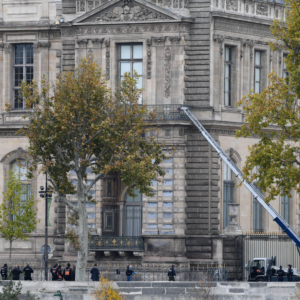
The vehicle-mounted ladder used by thieves to break into the Louvre on 19 October 2025.

Picture by: Abaca Press | Alamy

In mid-October, in under eight minutes, eight items of jewellery worth roughly 88 million euros ($102m) vanished from the Louvre museum in Paris.

Yes, that really happened, and like everyone else, I was shocked. How could that even be possible?

On 19 October, four suspects arrived around 9.30am at the Gallery of Apollo with a vehicle-mounted mechanical lift, using it to reach a first-floor balcony facing the Seine. Photos taken later from the scene showed the ladder still there, leading up to a window, which two of the thieves cut open with power tools before climbing inside.

Once in, they threatened the guards, forced an evacuation and cut through the glass of two display cases holding centuries-old royal jewels. Moments later, they escaped on two scooters. When I saw the news that morning, it felt like a scene ripped straight out of an Ocean’s series of movies.

The stolen items were extraordinary: a sapphire tiara, sapphire necklace and earring worn by queens Marie-Amélie and Hortense, an emerald necklace and earrings worn by Marie-Louise (Napoleon Bonaparte’s second wife), and a tiara and brooch belonging to Empress Eugénie, and the “reliquary brooch”.


In their rush to flee, the thieves dropped Eugénie’s crown, encrusted with more than 1,300 diamonds and 56 emeralds, which was recovered later, damaged. The rest remain missing. Curiously, the museum’s most famous diamond was not touched. The Regent Diamond, long rumoured to be ”cursed”, was left behind and many believe this was intentional.

Failed security

But the real mystery is the security failure. How could the Louvre, the most visited museum in the world, home to priceless art and artifacts from many centuries, allow a break-in this simple?

Reports revealed that the balcony used for entry had no security camera surveillance. The glass cases holding the jewels had no motion sensors or alarms.

And in an age where even grocery stores use AI cameras to detect shoplifting and banks rely on biometric scans, the Louvre’s digital defences were allegedly protected by a password as basic as ‘Louvre’. Not only was the building vulnerable, so was its system.

That contrast is what makes this heist so unsettling to me. We live in an era of hyper-advanced security – facial recognition at airports, cars unlocking via fingerprints, homes monitored from thousands of miles away – yet inside the Louvre, a museum responsible for protecting some of humanity’s most valuable objects, the security felt closer to the 1980s.

That contrast is what makes this heist so unsettling to me. We live in an era of hyper-advanced security – facial recognition at airports, cars unlocking via fingerprints, homes monitored from thousands of miles away – yet inside the Louvre, a museum responsible for protecting some of humanity’s most valuable objects, the security felt closer to the 1980s.

Maybe this happened because we’ve grown used to thinking of threats as digital: hackers, deepfakes, cyberattacks. But this heist was the opposite – no fancy tech, no AI usage, just disguises, speed and nerve.

And that is an uncomfortable lesson. While governments, banks and industries race to upgrade digital protections, some of the world’s most important institutions are still relying on outdated, incomplete systems. When those systems fail, the consequences are exactly what we saw in Paris: a simple theft with no crazy hacking that simply should not have been possible in 2025.

As of 25 November, all four members of the alleged gang have been arrested,alongside several accomplices.

Written by:

author_bio

Kexin Shi

Writer

Warsaw, Poland

Kexin studies in Warsaw, Poland, where she was born in 2008. She is interested in dentistry and plans to study biochemistry. For Harbingers’ Magazine, she writes about science, human rights, and international affairs. In March 2025, she launched a subsection for the magazine called, Crisis Zones, alongside her peer, Helena Bruździak, where they aim to raise awareness among young people about the challenges refugees and displaced people face.

In her free time, Kexin plays the piano, and enjoys horse riding and tennis.

Kexin speaks Mandarin, English and Polish, and is currently learning Spanish.

Edited by:

author_bio

Arnav Maheshwari

Economics Section Editor 2025

Georgia, United States

opinion

🌍 Join the World's Youngest Newsroom—Create a Free Account

Sign up to save your favourite articles, get personalised recommendations, and stay informed about stories that Gen Z worldwide actually care about. Plus, subscribe to our newsletter for the latest stories delivered straight to your inbox. 📲

Login/Register