


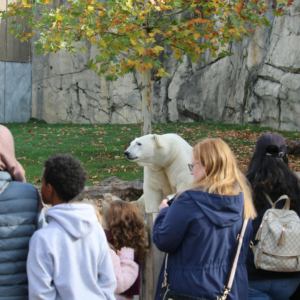
16-year-old Mane from the Armenian Newsroom argues that traditional zoos must be replaced by animal sanctuaries
Nowadays, we have a weird way of ‘connecting’ with nature. We buy a ticket, walk through a gate and see an animal walking back and forth in a tiny, uncomfortable cage. With 2030’s conservation deadlines looming, we need to stop asking if we can keep animals in cages and start asking why we still do.
While zoos are designed for public viewing and species breeding, true sanctuaries are built entirely for the animal, taking in sick and injured animals and providing a permanent home to those that cannot be released back into the wild. Some sanctuaries are open to the public. Some also allow breeding, but the norm is to not allow this to happen.
It’s a mistake to think a lack of bars equals happiness. Designing an open enclosure to look pretty for tourists does nothing to heal the psychological trauma of an animal that is still being exploited for entertainment. For most animals, psychological confinement is far more damaging than the physical kind.
View this post on Instagram
Scientists call this zoochosis. It’s a type of mental suffering caused by the stress of being locked up and the lack of mental stimulation. It’s not just boredom, it’s much deeper.
In almost any zoo, you can see the signs: polar bears swinging their heads over and over, birds pulling out their own feathers, or monkeys biting themselves just because they are so stressed. These animals are built to travel for miles, hunt and live in big groups, not to sit in cages and entertain people.
Granted, there are some good points to the system. Some zoos have saved animals from disappearing forever.
Harbingers’ Weekly Brief
Subscribe to the Harbingers’ Weekly Brief, a newsletter written by the editorial board of Harbingers’ Magazine, the world’s youngest newsroom, delivered to your inbox every Monday morning.
![author_bio]()
![author_bio]()


For example, the California condor was on the verge of extinction, with only 27 left in the wild. But thanks to breeding programmes by zoos such as the San Diego Wild Animal Park, now their population has gone up to hundreds in the wild. But we have to know the difference between helping and entertainment.
We are the first generation that can see wildlife on our screens without ever disturbing them.
Traditional TV documentaries started this shift, but today, tools like VR headsets, drones and AI field cameras let us study animals in their actual habitats in real time.
Thanks to such sophisticated technology, we don’t need to be close to animals to learn about them. Keeping them in cages just for our own curiosity doesn’t make sense anymore.
Imagine zoos that are huge, open spaces where humans are the ones watching from a far distance, or even through a screen. Safari parks are beneficial because they allow us to observe animals in their natural habitats, but overtourism can cause animals to be harassed and harmed for the sake of entertainment.
We get to decide, will zoos stay as prisons from the past, or will we demand they become true sanctuaries? It is time to stop being OK with concrete boxes.
We need to care more about an animal’s mental health than our own weekend fun. If we truly love nature, we should let it remain wild as it is, even if it means we don’t get our selfie.

Edited by:

© 2026 The Oxford School for the Future