


15-year-old Elaha from the Afghanistan Newsroom explains the new rule’s impact on girls’ and women’s everyday lives
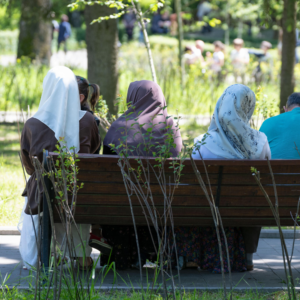
Compulsory hijab has become an important part of public life in Afghanistan. Recently, a new rule requiring girls who are taller than 150 centimetres to wear hijab – to cover their hair completely as soon as they are enter a public space – has brought renewed attention to the issue.
While the law sets a clear requirement, its effects are often experienced differently in everyday life. For many women and girls, compulsory hijab is not only a legal requirement but also something that influences education, movement, social activities and daily routines.
The discussion around hijab rules is not only about clothing, but also about how laws affect people’s everyday experiences. In public spaces, schools and communities, women and girls may experience these rules in different ways. Some see the requirement as part of religious and cultural values, while others raise questions about personal choice and individual freedom.
Harbingers’ Weekly Brief
Subscribe to the Harbingers’ Weekly Brief, a newsletter written by the editorial board of Harbingers’ Magazine, the world’s youngest newsroom, delivered to your inbox every Monday morning.
![author_bio]()
![author_bio]()


Although the rule applies across Afghanistan, people’s experiences are not always the same. Some describe stricter enforcement in certain situations and places, especially large cities such as Kabul and Bamyan, while others say their daily routines have changed very little.
These different experiences show that the impact of the law is not always the same for everyone. For some girls, the regulations may create stress or uncertainty about what is expected in different places. For others, following the rules may already be part of their daily life.
The experiences of female students also reflect these different realities. Since 2021, when the Taliban returned to power in Afghanistan, girls over 12 (grade six) have been banned from attending school, but younger girls who still study are affected by these rules, as they continue their education while adapting to changing expectations.
View this post on Instagram
Harbingers’ spoke to an 11-year-old student in grade five. She said: “I asked my mother about the new rule because I wanted to understand it better. She told me to follow the school rules. But I just want to focus on my studies.”
Another student, from grade six, told Harbingers’: “I already wore hijab before, so the new rule did not change much for me. But I think some girls may feel nervous because they are not used to it. Everyone has a different experience.”
Although both students live under the same rule, their experiences and opinions may be different. Their stories show how public policies can affect young people in different ways depending on their personal circumstances, family background and daily lives.

The issue of compulsory hijab also connectsto larger discussions about society and individual rights, which raise important ethical and social questions. How much control should laws have over personal choices such as clothing? Where should the balance be between religion, culture and personal freedom?
Different people have different answers to these questions. Some told Harbingers’ that they believe that laws about clothing help protect religious and cultural values. Others believe that individuals should have more control over decisions that affect their personal lives. These different viewpoints continue to shape conversations about compulsory hijab in Afghanistan.
Beyond the theoretical debate, the daily experiences of women and girls remain an important part of understanding the issue. A rule written on paper can have different effects when it becomes part of people’s everyday lives. Students, families and communities each experience these changes in their own ways.
Edited by:

© 2026 The Oxford School for the Future