



18-year-old Ryleigh examines the sudden increase in school violence and the possible causes
On 22 June, students of San Jose National High School in Tacloban City walked into school expecting a day like any other. Little did they know that a tragedy was about to unfold that would come to haunt the entirety of the Philippines.
Two teenagers, both students at the school, began shooting indiscriminately into a classroom, killing three and injuring 20 others. It was the country’s first mass school shooting.
It was also the third case of student violence in just one week. A grade-eight student stabbed seven fifth-graders in General Trias City, while an 18-year-old student stabbed a classmate in Cavite City.
Now, pupils are living in fear, parents grow increasingly paranoid, and educators, lawmakers and authorities are scrambling to figure out how to stop this rise in school violence.
Harbingers’ Weekly Brief
Subscribe to the Harbingers’ Weekly Brief, a newsletter written by the editorial board of Harbingers’ Magazine, the world’s youngest newsroom, delivered to your inbox every Monday morning.
![slide image]()
![author_bio]()
![author_bio]()


History of student violence
Numerous cases of school violence involving students have been reported in the past decade. In 2015, a 21-year-old student in Iloilo City killed another student in their classroom due to alleged “constant bullying”.
The Philippine National Police (PNP) recently recorded 50 incidents involving Children in Conflict with the Law (CICL) in schools over a two-month period (16 June–19 August). These included 12 shooting threats, four stabbing incidents, four cases of illegal possession of firearms, two shooting incidents and two death threats.
Many previous instances of violence possess a common denominator: a personal vendetta against a specific target. Recent incidents, however, have involved more indiscriminate violence.
“A random high schooler came into the classroom with a kitchen knife and all my best friends thought that it was a toy… They were joking until she started to hurt my classmates in their shoulders,” said Zoe, a grade-five student who witnessed the stabbings at the school in General Trias City.
View this post on Instagram
Violent video games
Investigations into the Tacloban City shooting have uncovered multiple possible influences behind the incident.
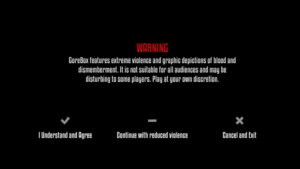
These include violent or combat-based video games featuring gore and brutal acts, such as the online gaming app GoreBox, which the two suspects regularly played. It has been temporarily banned by the Philippines’ Cybercrime Investigation and Coordinating Center (CICC) as a precautionary measure pending investigation.
The ban has sparked mixed public sentiment on whether combat-based video games cause aggression and violence in real life.
Recent analysis of previous studies showed that 68% found no evidence of a link between the two, while 19% indicated a direct association and 13% attributed aggression to other factors such as mental health, family situation, peer bullying and socio-economic stress.
Despite the absence of consistent links between video games and violence, the government has remained open towards banning or restricting violent video games for Filipino youth.
Online violent extremist groups
According to the PNP anti-cybercrime group, online “nihilistic violent extremist” groups (NVEs) groom young people worldwide to commit heinous crimes through blackmail or online rewards.
Groups such as 764 and No Lives Matter have been tagged as suspected groomers of the young Tacloban shooters and 24 other minors.
Harbingers’ spoke to Angel Redoble, chairman of the Philippine Institute of Cybersecurity Professionals. “What we have seen is they frequent online gaming platforms, where they identify their target or their targets. So, Roblox, Minecraft, even TikTok. The next stage is to befriend the victim,” he said.
The groomers do this by providing them with in-game currency, then invite them to encrypted chat platforms such as Discord and Telegram. Once there, chats become unmonitored and, in exchange for more in-game currency, they push their victims to complete tasks, such as self-inflicted harm, sexual abuse, and violence towards others.
Social rejection and mental health

While dangerous, NVEs are not the only reason behind violence involving students: mental health issues and social rejection including bullying by peers also play a part.
One such example is the 1 July stabbing in Zamboanga,where a grade-11 student stabbed two classmates due to bullying.
The Department of Education has acknowledgedthat support systems for students must be expanded to further prevent the decline of students’ mental health.
“We also need to ensure their mental and emotional well-being, and make sure that they will have access to helplines and guidance from schools undaunted,” education secretary Sonny Angara said.
What can be done?
Counter-violence measures include stricter bag checks as well as school shooting drills. However, preparation and security alone are insufficient as preventative measures, and NVEs and social rejection remain key.
Cybersecurity expert Redoble urged parents to monitor their children frequently, approve what they buy or play, and look out for any red flags or signs of online grooming.
“The first obvious change in behaviour is when the child becomes secretive. When you see your children with bruises or anything, that’s considered self-inflicted harm, also a possible sign of these types of grooming,” he explained to Harbingers’.
He also highlighted the need for stricter age checks on social media and online gaming platforms, unlike the current system that only requires the child to simply declare whether they are aged 18 or over.
Comprehensive mental health support in schools is essential to help students and to prevent them becoming vulnerable to grooming online, according to the Psychological Association of the Philippines (PAP).
The Department of Education has expanded its helpline for students (Learners TeleSafe Contact Center Helpline) to include all regions, in an effort to make psychological support more accessible.
PAP emphasised that school violence involving students is an issue that cannot be attributed to one cause: “Preventing school violence is a shared societal responsibility. Lasting prevention begins long before violence occurs – in the relationships, environments, institutions and systems that shape children’s lives.”

Edited by:

© 2026 The Oxford School for the Future