

18-year-old Reva explores the implications of the US proposals to cap international students
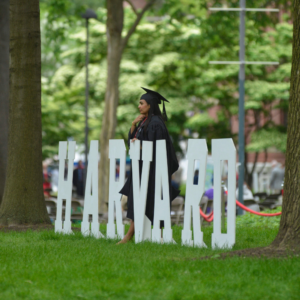
Elle Woods of Legally Blonde fame overcame all sorts of obstacles and prejudices to get into Harvard Law School, but right now it is very hard for a certain demographic of students to gain admission into some of the most prestigious and sought-after universities in the world.
For decades, attending university in the US has been a dream for thousands of students. And landing a spot at one of the top universities has been seen as a guaranteed stepping stone to success.
Studying in the most powerful country in the world elevates one’s social status and provides soft power like no other nation, making applying to schools in the US seem like a no-brainer. Until now.
View this post on Instagram
In 2024/25, 1.2 million international students were studying at US colleges, 6% of the nationwide total and 5% more than the previous year.
However, since coming to power for a second time, US president Donald Trump has enacted various policies that limit options for international students.
In his first few days in office, Trump threatened to cancel the visas of pro-Palestine student protesters because he considered them “Hamas supporters”, following through on that promise by revoking 300 visas in March 2025.
In addition, the government terminated 4,700 international students’ records from the database that the Department of Homeland Security keeps on foreign student visa holders, due to minor infractions such as reckless driving, DUIs and other misdemeanours that were often dismissed.
Harbingers’ Weekly Brief
Subscribe to the Harbingers’ Weekly Brief, a newsletter written by the editorial board of Harbingers’ Magazine, the world’s youngest newsroom, delivered to your inbox every Monday morning.
![author_bio]()
![author_bio]()


As a result, students lost employment authorisation, eligibility to return to the country and risked deportation by Immigration and Customs Enforcement (ICE).
A new proposal also restricts the job-seeking period for international students after graduation. These students used to be allowed to stay in the US for an unspecified period of time known as “duration of status”, depending on the length of the academic programme they were enrolled in. Now, students will only be allowed to remain for four years.
Some universities were targeted with more severe restrictions. In 2025, Trump banned Harvard from enrolling international students for allegedly not doing enough to combat antisemitism on campus. A judge later blocked the policy, but could not prevent the government from freezing billions of dollars in federal grants to Harvard.
Students going to Asia instead
Trump’s policies and the uncertainty and fear that international students face is deterring them from considering the US for higher education.
American universities reported an average 20% decreasein international student enrollment, at both undergraduate and graduate levels, for the 2026 spring semester.
An anonymous master’s student from China told the BBC that they are regretting applying to the University of Pennsylvania. “Even if I study in the US, I may be chased back to China without getting my degree,” they said.

Instead, students are seeking alternatives. Chinese studentshave begun migrating across Asia to Malaysia (from 9,000 in 2019 to 47,000 in 2024) and Thailand (6,200 in 2016 to 28,000 in 2024). Japan, South Korea and Singapore remain popular destinations, as always.
Chinaitself has invested a considerable amount of resources in higher education, and now has 15 of its own universities in the global top 100 rankings, making its universities an attractive option for students from Asia and Africa. Hong Kong’s top universities are particularly appealing to English speakers from all over the world.
The drop is not exclusive to the US. Other previously attractive university destinations have also set a tighter capon international students, making the “big four” (US, UK, Canada, Australia) less appealing to foreigners.
Income and budgets down
The effects are palpable. In the 2024–25 school year, international students contributed $42.9bn and supported 355,736 jobs in the US. However, as of autumn 2025, the country has faced a loss of $1.1bn and nearly 23,000 jobs due to the growing absence of international students.
Some private colleges have been greatly affected by these changes. DePaul University in Chicago saw a 62% decline in new international graduate students, contributing to widespread layoffs and salary freezes.
The US prides itself on its commitment to prestige, education and enrichment, but these universities will have to pivot in order to maintain their reputation in light of the current anti-foreign student policies threatening their funding.
So while Elle Woods did make it to Harvard, the future for many international students who aspire to do the same is still up in the air.

Edited by:

© 2026 The Oxford School for the Future