Harbingers’ Magazine is a weekly online current affairs magazine written and edited by teenagers worldwide.
harbinger | noun
har·bin·ger | \ˈhär-bən-jər\
1. one that initiates a major change: a person or thing that originates or helps open up a new activity, method, or technology; pioneer.
2. something that foreshadows a future event : something that gives an anticipatory sign of what is to come.
We and our partners may store and access personal data such as cookies, device identifiers or other similar technologies on your device and process such data to personalise content and ads, provide social media features and analyse our traffic.
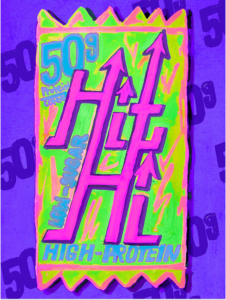
“High-protein” products surged from 2013 to 2024, turning a basic nutrient into a marketing tool.
Picture by: Harbingers' Project
Protein pasta. Protein pancakes. Protein water. Protein water? Has the protein obsession gone too far?
It feels like everywhere you look on social media, you’re being told to eat more and more protein. Influencers, fitness accounts, even regular people constantly push the idea that higher protein intake is always better.
Brands have been quick in responding to that. The number of food and drink products marketed as “high protein” quadrupled between 2013 and 2024, turning a basic nutrient into a profitable selling point.
Ordinary foods are being relabelled and sold back to us as nutritionally superior simply because they contain protein.
Don’t get me wrong, we do need protein. It has clear benefits: it helps with muscle repair, keeps you fuller for longer, and is an important part of a balanced diet.
But somewhere along the way, protein has gone from being important to being moralised. “High-protein” has quietly become shorthand for “good,” while foods lower in protein are often framed as less valuable.
Harbingers’ Weekly Brief
Subscribe to the Harbingers’ Weekly Brief, a newsletter written by the editorial board of Harbingers’ Magazine, the world’s youngest newsroom, delivered to your inbox every Monday morning.
See you on Monday!
Ooops - please try again.
According to US scientific guidelines, the recommended dietary allowance (RDA) for teenagers aged 14 to 18 is 0.85g of protein per kg of body weight per day, roughly 52g for boys and 46g for girls. However, individual needs vary depending on body weight, age and activity level.
Yet social media has created the impression that we should be consuming far more than that. This doesn’t just affect what we see online, it starts to change the way we think about food altogether.
When eating becomes calculation
There’s an increasing pressure to prioritise protein in every meal, sometimes to an excessive degree. That pressure can even start to affect people’s relationship with food.
California-based doctor Lauren Hartman, who specialises in eating disorders, has raised concerns about this trend, particularly among teenagers.
She warns that the focus on hitting protein targets can fuel unhealthy behaviours: “One of my concerns that comes up with this protein discussion is the worry that it could potentially fuel tracking – tracking the grams, tracking the calories – which is really risky, especially for teens.”
There’s already strong evidence linking this kind of tracking to disordered eating. But it doesn’t stop at macro tracking, an increasing focus on protein itself can also become obsessive. Some people begin to centre their diet around protein because it is associated with sensations of fullness.
Pressure to prioritise protein in every meal can negatively affect people’s relationship with food.
“Tracking does not bring joy,” Hartman explains. “It increases obsession and anxiety and rigidity. Meals should be about nourishment and pleasure and connection, not math or feeling like, I’m somehow not doing what I’m supposed to do.”
I’ve personally seen this protein anxiety play out in real life. A friend of mine became really focused on hitting her daily protein target. It got to the point where she was forcing herself to eat foods she didn’t even like. She told me she hated cottage cheese, but still made herself eat it just to reach her protein goal.
An intense focus on protein can carry physical downsides. Some high-protein diets encourage increased consumption of red and processed meats, which can raise the risk of heart disease and increase LDL (“bad”) cholesterol. In some cases, high protein intake can also put strain on the kidneys.
At the same time, this protein focus has diverted attention away from other essential nutrients, especially fibre, which plays a crucial role in digestion and long-term health. In fact, 96% of adults and 11–18s don’t meet the recommended fibre intake, and less than 1 in 10 teenagers meet the ‘5 A Day’ fruit and vegetable target, according to a UK government survey from 2019 to 2023.
None of this means protein is the problem. The problem is the imbalance and that the conversation has become one-sided.
I don’t know about you, but food should be something you enjoy while also meeting your nutritional needs. It shouldn’t feel like a constant calculation or something you have to force yourself through.
Irma Mecele, born in 2009 in London, joined Harbingers’ Magazine in August 2025 as part of the Japan Newsroom programme. Since then, she has written regularly for the magazine, covering politics, international affairs and society. Her work quickly established her as a thoughtful reporter and earned her the role of International Affairs Correspondent in January 2026.
In February the same year, Irma reported on the ground from the Munich Security Conference, becoming one of the world’s youngest journalists to cover the event in person. She produced a series of multimedia pieces combining interviews, research and her own reporting from the conference.
Her consistent work and engagement with the magazine led to her appointment as International Affairs Section Editor for 2026, a role she took up on 1 March.
Irma is interested in history, politics and the environment, and plans to study economics. She has completed a Columbia University programme, undertaken an internship at the European Union, and participated in The Voice Kids of Spain.
In her free time, Irma plays tennis and piano, practises karate and boxing, and enjoys learning languages, travelling and singing. She speaks Russian, English and Spanish, and studies French and Lithuanian.
🌍 Join the World's Youngest Newsroom—Create a Free Account
Sign up to save your favourite articles, get personalised recommendations, and stay informed about stories that Gen Z worldwide actually care about. Plus, subscribe to our newsletter for the latest stories delivered straight to your inbox. 📲
We use cookies to ensure that we give you the best experience on our website. If you continue to use this site we will assume that you are happy with it.