


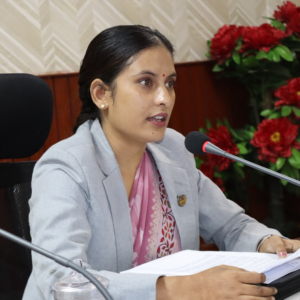
16-year-old Samuna B.K. from the Nepali Newsroom explains the government’s actions against caste-based discrimination
Nepal’s new government, which was formed following the historic election on 5 March, issued its first official apology to the Dalit community that same month. The historic gesture recognises the long history of discrimination that Dalits have endured, and aims to make amends for past wrongs, promote equality and foster a better understanding of the urgent need to eradicate caste-based discrimination.
Who are the Dalits?
The Dalit community refers to people who are placed in the lowest level of the traditional Hindu caste system, formed thousands of years ago. There are five castes, the lowest being those of the Dalit community who have historically been considered “untouchable”.
Today, Nepal has more than 20 Dalit caste groups that make up 13% of the total population. Among these, Kami are the largest community (29.57%), while Halkhar are the smallest (0.12%).
View this post on Instagram
Harbingers’ research and interviews reveal that the marginalisation of the Dalit community is due to a complex web of interconnected factors rather than a single cause. These include caste discrimination, poverty, lack of education, segregation and weak law enforcement.
Dalits have been systematically denied the right to mix freely with other groups. This deep-seated animosity has at times proved fatal. There have been many cases when Dalit boys have been murdered for being interested in love affairs with girls from upper castes.
For example, in May 2020, Nabaraj BK and five young men, who belonged to the Dalit community, were attacked by a village mob on charges of Nabaraj’s relationship with a girl from a dominant caste. The young men were chased to the edge of the Bheri River and killed. In 2023, 26 people from the mob were imprisoned for murder and caste-based discrimination.
Harbingers’ Weekly Brief
Subscribe to the Harbingers’ Weekly Brief, a newsletter written by the editorial board of Harbingers’ Magazine, the world’s youngest newsroom, delivered to your inbox every Monday morning.
![slide image]()
![author_bio]()
![author_bio]()


Despite their significant numbers, Dalits are often treated unfairly in Nepal and ancient practices of untouchability persist. They are plagued by numerous social problems.
In 2024, Amnesty International published a report on caste-based discrimination in Nepal, where authorities have failed to counteract these human rights violations.
This government’s recent apology is part of an incremental trajectory of state interventions. In 2006, the government declared the country an ‘untouchability-free” nation. In 2011, it also passed stronger legal protections, making caste discrimination and untouchability criminal offences punishable by law.
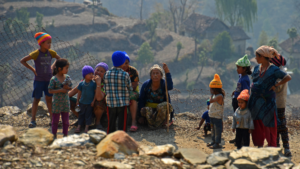
The new government also announced special scholarships, educational support and employment schemes for marginalised communities. Most recently, in May, it doubled the nutrition allowance for Dalit children.
Historic milestones also have been reached in political inclusion. The governing Rashtriya Swatantra Party (RSP) made Sita Badi the minister for women, children, gender and sexual minorities, and social security.
She is the first woman from the highly marginalised Badi communityto become a minister – a seismic shift for her people. “This is a huge opportunity for the Badi community,” she said.
Discrimination and violence
However, the memory of discrimination and marginalisation reverberates across generations. The burden of the past is still heavy on members of the Dalit community, even as they welcome the state’s recognition.
Lal Bahadur Nepali, 77, recalls a childhood of social exclusion. He was barred from entering temples and drinking from the same taps as upper-caste villagers.
“I am extremely delighted with the new government move,” Lal Bahadur told Harbingers’. “It was long overdue, but the challenge is the implementation [of the laws and schemes mentioned].”

Devi Nepali, 60, has similar memories of a harsh upbringing. Her family was treated as untouchable and barred from entering local houses and temples. She says such overt practices have declined over time, but stresses that discrimination is still very much present in the rural villages.
Gopi Krishna B.K, 33, recalls a time when his village had only one water tap. Dalits had to constantly battle with upper-caste residents to get water from the tap or the river, all the while being verbally abused on public roads.
“Nowadays, every person has their own water tap in their house, so there is not the same discrimination as there was ten years ago,” he said.
However, he remains cautious about the political rhetoric, saying “The government has issued an apology, but implementation and real-life change that Dalits and lower castes can feel will be the key step.”
Despite macropolitical progress, safety remains a major concern in remote areas. Harbingers’ spoke to Sarita Sharki, 26, who lives in Bajura, one of the most remote districts in Nepal. She laments the deep discrimination that still exists in her village.
She shared a harrowing experience involving her young daughter, Manuka Sarki, who mistakenly wandered into the garden of an upper-caste family. The owners attacked the child with knives because of her lower caste. “Fortunately, that knife was not that big – otherwise, it would have taken my daughter’s life,” Sarita said.
For mothers like Sarita, the official words from Kathmandu have not yet translated into safety on the ground. She thinks that the new government has not paid enough attention to these violent grassroots realities, and that the community still has to face enormous difficulties in their daily lives.

Edited by:

© 2026 The Oxford School for the Future