



The Editorial Board acknowledges progress for the inclusion of the LGBTQ+ community in society and the setbacks they still face in 2025
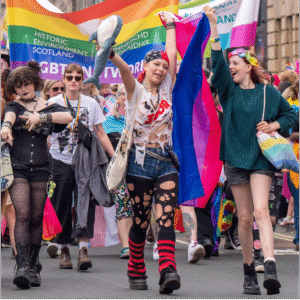
Pride Edinburgh 2025 parade on 21 June.
27 June 2025
Why Pride Month matters: Honouring the journey and amplifying LGBTQ+ voices
Pride Month is a time to celebrate the LGBTQ+ community, but it can also serve as a launching pad for further discussion about discrimination and other hardships that are still prevalent today.
It was US president Bill Clinton who declared June as Pride Month, back in 1999. June was chosen to commemorate the Stonewall riots, which began on 28 June 1969. The culmination of grievances against police harassment and discrimination against LGBTQ+ individuals reached a tipping point when a violent police raid took place at a New York City gay bar called the Stonewall Inn. The riots ended six days later.
Subsequently, LGBTQ+ activism took flight. However, Pride Month’s commemoration certainly didn’t resolve all the issues that the LGBTQ+ community continued to face for decades to come – same-sex marriage in the US was legalised only ten years ago – and continue to face today.
Even though LGBTQ+ individuals have often had to hide their true self from society, their presence throughout history, even without due recognition, is doubtless. They have always been here because they are part of humanity.
Harbingers’ Weekly Brief
Subscribe to the Harbingers’ Weekly Brief, a newsletter written by the editorial board of Harbingers’ Magazine, the world’s youngest newsroom, delivered to your inbox every Monday morning.
![author_bio]()
![author_bio]()
![author_bio]()
![author_bio]()
![author_bio]()
![author_bio]()
![author_bio]()


For instance, LGBTQ+ portrayal in culture is far from new. Queer characters, often veiled in subtext, have existed for centuries in books, plays and films, their identities insinuated but rarely stated. Only in recent years has this representation become more explicit. From coded characters in 20th-century literature to the emergence of LGBTQ+ storylines in 2000s television, representation has grown – but is it improving?
Today, TV shows such as Heartstopper and Sex Education offer more thoughtful portrayals of LGBTQ+ lives: authentic, emotionally rich and central to the plot without being sensationalised. However, some fear this progress masks a troubling trend; forced inclusion can lead to underdeveloped, stereotype-driven characters. Rather than enhancing visibility, such portrayals risk flattening identities and reinforcing harmful clichés.
Historically, queer narratives were veiled; now, they’re louder – but volume doesn’t always equal depth. As representation increases, so must nuance. Visibility matters, but authentic storytelling matters more.
Globally, Western media has led in this shift, while representation in non-Western cultures remains limited or taboo. As of 2025, 65 countries have criminalised homosexuality, while 14 countries have criminalised gender identity and/or expression of transgender people. Such laws make it difficult for someone to discover their sexuality or gender identity and connect with other people in the community.
Oftentimes, people from unsupportive families or societies do not learn of the existence of the LGBTQ+ community or have only seen it in a negative light until they’re much older. Such ignorance results in homophobia, transphobia and social rejection – which are leading factors in the prevalence of mental health issues among queer people.
Public support and visibility
Social media allows many young people to learn about the LGBTQ+ community earlier on, spreading awareness and allowing queer youth to discover their identity in a safer way. It fosters a sense of community and belonging, which is a crucial factor in good mental health.
Social media representation amplifies one’s understanding of sexualities and gender identities, creating a more supportive and accepting community. Allowing young queer people to find a community outside of their families can be life-changing and even life-saving, especially to those from unsupportive societies.
The business sector also plays an important role in promoting inclusion. For example, over the past two decades, US corporations have taken an increasingly visible role in supporting LGBTQ+ inclusion, both in the workplace and in the public sphere. Each year during Pride Month, companies display rainbow logos, launch marketing campaigns and sponsor events to signal their commitment to equality.
Tools such as the Human Rights Campaign’s Corporate Equality Index(CEI) have helped drive the trend, with more than 1,400 businesses participating in 2025 and hundreds earning perfect scores for their non-discrimination policies, inclusive benefits and trans-inclusive support.
However, things are changing for the worse – at least in the US under Donald Trump’s administration. Corporate support on behalf of LGBTQ+ communities has gone quiet. Many companies have stepped back from public Pride campaigns and sponsorships due to political backlash and fear of retaliation. Gravity Research discovered that 39%of US companies reduced their public engagement this year, while none planned to increase it.
Despite these setbacks, businesses are looking inwards. The majority stand in support of LGBTQ+ employees through internal policies, employee networks and open benefits. An example is Microsoft and Lenovo, which scored highest on the CEI for its visible and internal commitments. By contrast, Amazon has faced criticism for quietly removing LGBTQ+ equity statements from its corporate policies, raising questions about the strength of its support.
Outside the US
While media attention is often focused on developments in the US, it’s important to recognise the worldwide experience of LGBTQ+ individuals.
Take Hungary, for example. The country has never been very supportive of the LGBTQ+ community. Between 1878 and 1961, homosexuality was considered a criminal offence by the Hungarian Penal Code; today, queer people in Hungary still face significant challenges.
In March, the Hungarian parliament passed extremely harsh legislation outlawing the annual Pride march and similar events, “penalizing public support for LGBT people in the country”. The authorities have stated that facial recognition technology will be used to identify individuals at the event (scheduled for 30 June), who will be fined up to €500. It is very disheartening that attending an event that celebrates freedom of expression and identity has become so risky.
To make matters worse, the message the governing Fidesz party communicates is that if children are exposed to events like Pride it will hinder their moral development – this is the party’s reasoning for banning the celebration.
To fight back, the day the law passed, thousands of people gathered in Budapest to demonstrate their support for Pride and their rejection of government policy. Such protests showcase the unity in Hungarians when there is a need to come together to stand for what is right and seek justice for those put into an oppressive situation.
Undoubtedly, the LGBTQ+ community has made tremendous strides in the right direction in recent decades. However, this success should not blind us to seeing what is still to be done.
In the vast majority of societies, LGBTQ+ individuals face harsh discrimination and marginalisation, and it can be dangerous for them to be who they are in the open. Even in countries where one can be open, or even protected by law, such rights are not always guaranteed – there are many who still hold negative views and hinder progress.
LGBTQ+ people have always and will continue to be a part of society because it is part of human nature, and as members of humanity, we must look out for each other.







© 2026 The Oxford School for the Future