



17-year-old Viola examines the growing popularity of online spiritual practices among Gen Z
What comes to mind when you hear the word ‘witch’? Is it a woman with a black hat flying on a broomstick and casting evil spells, or someone practicing tarot reading, astrology and full-moon rituals?
If you picture the latter, you are probably thinking of a much more modern interpretation of witchcraft, which is increasingly associated with Gen Z online culture.
Here I explain how Gen Z is reshaping witchcraft and what its recent surge in popularity says about identity and spirituality.
Harbingers’ Weekly Brief
Subscribe to the Harbingers’ Weekly Brief, a newsletter written by the editorial board of Harbingers’ Magazine, the world’s youngest newsroom, delivered to your inbox every Monday morning.
![author_bio]()
![author_bio]()

What is modern witchcraft?
In the 21st century, to be a witch no longer means taking part in secret societies and making pacts with the Devil. Instead, for many practitioners, modern witchcraft focuses on personal growth, mental health advocacy and social justice.
At the heart of witchcraft’s evolution are Gen Z, who have brought spiritual practices into the mainstream by using digital platforms – such as TikTok, Instagram and YouTube – to connect and learn from each other. These online spaces have created communities where people share methods and experiences.
As a result, exploring witchcraft has become easier than ever, allowing practitioners to blend their own techniques with ancient rituals while embracing their healing journey and self-reflection.
How do people practice witchcraft?
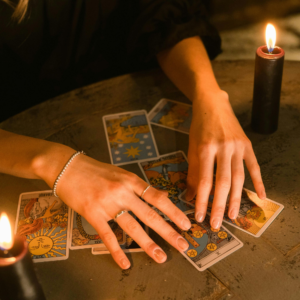
Modern witchcraft involves a wide range of spiritual practices including tarot readings, full-moon rituals, spell casting, astrology and herbalism.
Many practitioners believe rituals and intention can help bring about desired changes. While the success of these practices is widely accepted in the witch community, there’s no proven evidence that spells or rituals can alter reality.
When it comes to magical items, witchcraft tools include wands, crystals and candles. Practitioners use tarot cards, runes or pendulums as a way to try to gain clarity and insight. For healing purposes, they may also use herbs or natural ingredients inspired by traditional herbal knowledge.
View this post on Instagram
How has the perception of witches changed?
Society’s perception of witches has transformed over the centuries. Stories about figures with magical or supernatural powers were common in ancient Greece and Rome. These stories often revolved around women believed to have special knowledge of herbs, potions, nature and divine power.
Importantly, magic was seen as part of everyday life, not something to be feared or hated. During the Middle Ages, this perception shifted sharply. Women who were once seen as traditional healers and providers of folk medicine began to be viewed with suspicion.
In the 15th century, witches began to be persecuted, leading to events such as the Salem Witch Trials in the United States in the 1690s. Thousands of women were persecuted and executed after being accused of witchcraft. Due to the influence of Christianity, they were labelled as dangerous and demonic.
Today, even though witches are seen as increasingly sympathetic figures, their intentions are still being debated.
Why is witchcraft increasingly popular?
Since the early 2020s, interest in witchcraft has grown rapidly. This surge in popularity is partly driven by Gen Z’s interest in turning spiritual practices into tools for mental wellbeing and self-reflection.

One of the main driving forces is a widely felt sense of uncertainty. In a world where it is easy to feel uneasy due to climate anxiety,economic crises and political chaos, witchcraft offers internal clarity, peace and control. By lighting a candle, drawing a card and setting an intention, people turn uncertainty into something they can work through.
Pop culture also plays a key role. TV shows such as ‘Chilling Adventures of Sabrina’and ‘The Witcher’are a source of inspiration for Gen Z, because their diverse interpretation of magic and complexity heavily resonates with younger audiences.
The third factor that contributes to witchcraft’s rise is the generational resistanceagainst religious institutions; many young people turn to witchcraft over religion because it feels more flexible and individual.
What is the role of social media?
TikTok, along with other social media platforms, serves as a virtual coven for modern witches, representing an opportunity to learn about and connect with each other worldwide. TikTok currently offers 9.1 million spiritual ‘WitchTok’ videos, including tarot readings, full-moon rituals and manifestation tips.
These online spaces facilitate the free flow of information while emphasising the aesthetic side of witchcraft, making it appear more appealing and approachable.
Algorithms also play a vital role in witchcraft as they represent the oracle of the digital age.
For example, if you are feeling down and your social media pages are showing you content specifically tailored to your situation, then remember that’s not the universe – it’s the algorithms.
By recognising personal preferences, ‘For You’ pages can further recommend relevant spiritual videos and messages.
What about the spiritual market?
Many companies are reacting to the rise in spirituality by selling “mystical” products such as crystals, tarot decks and spell books.
Spiritual services are also increasingly common, especially among young people who use the global online marketplace Etsy to hire witches to get a love spell or to guarantee a cloudless sky on their wedding day.
Customers can access a variety of these services on Etsy, where a few pounds can buy services ranging from “beauty spells” to yearly tarot predictions.
Are there risks?
Modern witchcraft can have positive effects, but it also carries a lot of risks, including scams, exploitation and potential for psychological harm.
Witchcraft faces further criticism from scientists, who discredit its perceived effects by emphasising the lack of empirical evidence supporting it.
On platforms like Etsy, customers can easily come across dark magic practices, such as so-called “karmic revenge spells” and “lucifer initiation rituals”. As these services are usually quite cheap and accessible, they increase the likelihood of exploitation and emotional distress.
Online spaces provide a fertile ground for scams. Some users adopt aggressive sales tactics such as unsolicited DMs, push paid “emergency spells” or encourage dependence through fear-based messaging. To avoid scams and make safer choices online, always protect your information and do thorough research.

Edited by:

© 2026 The Oxford School for the Future