



18-year-old Anita explores the concept and reality of cultural genocide in Nakhichevan and Artsakh
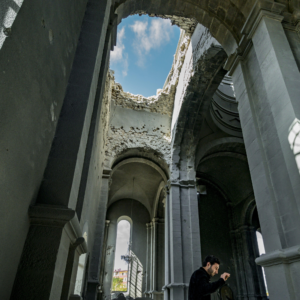
In 2020, during the Second Nagorno-Karabakh War, Holy Saviour Cathedral in Shushi, one of the largest Armenian churches in the world, was bombed by Azerbaijani forces.
The Azerbaijani president, Ilham Aliyev, claimed that the damage was “very minor” and could be “repaired within a maximum of two weeks”. But photographs from 2023 tell a different story. Not only has the damage not been repaired, but one of its most iconic features – a pointed dome, typical of Armenian Apostolic church architecture – has been destroyed.
Shushi is a historically significant city located in the mountainous region of Nagorno-Karabakh (also known as Artsakh). Known for its rich cultural heritage, strategic importance and complex political history, Shushi (Shusha in Azerbaijani) was a cultural and political centre for both Armenians and Azerbaijanis.
Harbingers’ Weekly Brief
Subscribe to the Harbingers’ Weekly Brief, a newsletter written by the editorial board of Harbingers’ Magazine, the world’s youngest newsroom, delivered to your inbox every Monday morning.
![slide image]()
![author_bio]()


The city has been called the “Jerusalem of Karabakh” because it holds profound religious significance for Armenians. Holy Saviour Cathedral, also known as Ghazanchetsots, is one of the most iconic religious structures in the region and one of the largest Armenian churches in the world. It served as a key place of worship and a symbol of the Armenian presence in Shushi.
The damage to the cathedral deeply alarmed many Armenians, heightening fears not only about the security of their cultural, religious and historical heritage, but also for the potential for cultural genocide in the region – especially with the knowledge of the destruction of Armenian heritage in the Azerbaijani enclave of Nakhichevan.
Cultural genocide refers to the deliberate destruction of the cultural, religious and historical symbols of a group, with the intention of erasing their identity and legacy.
It is not merely the physical loss of property, but a broader attack on the moral, spiritual and historical essence of a community.
This can involve the demolition of sacred sites, suppression of language, destruction of artefacts and rewriting of historical narratives – all of which aim to sever a people’s connection to their past and their presence in the land.
The term “genocide” was first coined by Polish lawyer Raphaël Lemkin in 1944. According to Simon Maghakyan, an Armenian political scientist specialising in heritage and security and a research fellow at Oxford University, Lemkin advocated for including cultural destruction in its legal definition, but some countries prevented its full adoption and it is not included.
As a result, the transfer of children from one group to another was recognised in international law as a form of cultural attack, but the destruction of sacred sites was not. The United Nations’ definition of genocide does not mention cultural genocide.
While Armenia has not formally accused Azerbaijan of cultural genocide, it has taken legal action and issued statements concerning the destruction of Armenian cultural heritage in Nagorno-Karabakh, including Ghazanchetsots Cathedral.
View this post on Instagram
Cultural genocide in Nakhichevan
Nakhichevan (also spelled Nakhchivan or Nakhijevan) is an autonomous region of Azerbaijan in the South Caucasus. Separated from the rest of Azerbaijan by Armenia, it shares borders with Armenia, Iran and a small stretch of Turkey.
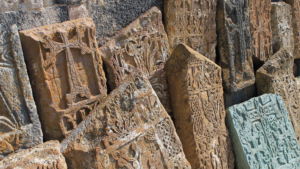
Historically, the region maintained a significant Armenian cultural presence, marked by numerous churches, monasteries and cemeteries along with thousands of khachkars (intricately carved Christian Armenian cross-stones) dating from the medieval period. Today, however, the Armenian population and their visible cultural heritage have been almost entirely erased.
The medieval St Karapet Monastery of Abrakunis was destroyed at the end of the 20th century, with a mosque constructed on its site by 2013. Another ancient church, St Hovhannes of Chahuk, was destroyed between 1997 and 2009, as confirmed by satellite imagery analysed by Caucasus Heritage Watch.
A major example is the medieval Armenian cemetery at Djulfa (also called Julfa or Jugha), once home to the world’s largest collection of khachkars with more than 10,000 stones.
Satellite imagery from 2003 to 2009, analysed by the American Association for the Advancement of Science, confirmed the cemetery’s total destruction, while eyewitnesses reported soldiers demolishing the khachkars in 2005 and dumping the remains into the Araxes river.
Despite clear evidence and formal condemnation from international bodies, including the EU Parliament, Azerbaijani authorities have denied the Armenian cultural presence in Nakhichevan and blocked independent investigations of sites.
Maghakyan has written extensively on the systematic erasure between 1997 and 2006 of the Armenian past in Nakhichevan. He said: “Azerbaijan has destroyed 100% of everything they thought was Armenian. This is very unique in the scale and scope of destruction.”
The destruction of Armenian cultural heritage in Nakhichevan can be explained by both cultural and political factors. Maghakyan says the first step was separation, which started as a “conceptual” separation (“this culture is not Armenian”) and later became “physical”, with Armenians not allowed to live in or visit Nakhichevan.
He argues that this was less to do with real security threats and more about regime security – using cultural destruction as a tool for authoritarian regimes to reinforce their authority and demonstrate control over perceived challenges.
He also points out that Azerbaijan acted when it felt it could “get away with it”. He links the two major phases of destruction in Nakhichevan to the oil deals Azerbaijan signed with the West in 1997 and 2005. “There was a direct correlation between the oil deals and active phases of destruction,” he says.
Lessons for Artsakh
Will the same acts of vandalism and cultural destruction happen in Artsakh, now that the Armenian population has been driven out? It seems it has already started.

Maghakyan notes that Azerbaijan is acting more cautiously than it did in Nakhichevan in 1997 and 2005, particularly regarding major monuments, though systematic targeting continues – especially against Armenian cemeteries.
An important lesson from Nakhichevan is the need to prevent both the conceptual and physical separation of Armenians from their monuments in Artsakh, says Maghakyan. He concludes that the best strategy for safeguarding these monuments is for Armenians to restore and maintain their active connection to their cultural heritage.
He also emphasises that staying informed is essential. Raising awareness and relying on credible information are key to holding those responsible for destruction accountable.
He recommends following organisations such as Caucasus Heritage Watch and Monument Watch Artsakh, which provide important updates through satellite imagery and media monitoring to track changes and threats to Armenian monuments.
Protecting cultural heritage is not only about preserving the past, but also about defending the identity and dignity of entire communities. Continued vigilance, documentation and advocacy are essential in the fight against cultural genocide.
As former prosecutor of the International Criminal Court, Fatou Bensouda said in 2021: “When one destroys a monument, it’s not just about stores and mortar – it’s an attempt to erase memory.”

© 2026 The Oxford School for the Future