Harbingers’ Magazine is a weekly online current affairs magazine written and edited by teenagers worldwide.
harbinger | noun
har·bin·ger | \ˈhär-bən-jər\
1. one that initiates a major change: a person or thing that originates or helps open up a new activity, method, or technology; pioneer.
2. something that foreshadows a future event : something that gives an anticipatory sign of what is to come.
We and our partners may store and access personal data such as cookies, device identifiers or other similar technologies on your device and process such data to personalise content and ads, provide social media features and analyse our traffic.
The Milano-Cortina 2026 Winter Olympics finished on Sunday night after two weeks (6-22 February) in which the world’s attention was turned to northern Italy.
The Gamesfeatured a wide range of disciplines, including skiing, skating, sliding, snowboarding and hockey. Thousands of athletes competed after years of training, representing more than 90 countries from every region of the world.
Below, we recount the glories and the controversies that marked this year’s celebration.
The opening ceremony featured a spectacular stage inspired by the Dolomites and Italian Renaissance art. For the first time in the Games’ history, two Olympic flames were lit simultaneously, one in Milan and one in Cortina. Notably, Heated Rivalry stars Hudson Williams and Conner Storrie, who play rival hockey players in the HBO Max hit show, carried the Olympic flame during the torch relay.
Italian tenor Andrea Bocelli opened the night with a live orchestral performance, followed by Italian pop star Laura Pausini, US singer Mariah Carey, and global rock band Maneskin.
More than 2,900 athletes marched in the parade of nations, each greeted by cheers as they entered the arena, marking the official start of the games. Unexpected teamssuch as Benin and Madagascar appeared this year. While athletes from Russia and Belarus were not allowed to representtheir countries, “Individual Neutral Athletes” (AINs) from those countries, including 13 Russian and 7 Belarusians, were allowed to take part.
The 2026 games also made history for being the most spread out.To accommodate all 16 disciplines, and to promote more tourism across northern Italy, venues were up to 13 hours apart. This meant that athletes from the same country were separated in isolated villages, and spectators needed to make more strategic decisions.
Even in the first few days of the Olympics, there was a slew of record-breaking results and surprising upsets across nearly all disciplines.
Jordan Stolz from the US won a gold with a time of 1:06.28, setting a new Olympic record in men’s 1000m speed skating.
Dutch skater Jutta Leerdam set a new women’s 1000m speed skating record.
Norwegian Johannes Hosflot Klabo equalled the all-time Winter Olympic record of eight golds in cross-country skiing.
Kazakhstani figure skater Mikhail Shaidorov gave his country its first Winter Olympic gold medal in 32 years when the favourite to win, US star Ilia Malinin, fell twice in a shocking performance.
Choi Gaon, aged just 17, won South Korea’s first ever ski/snowboard gold medal in the women’s snowboard halfpipe.
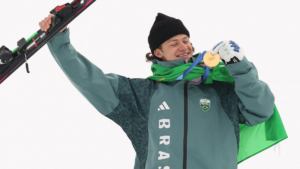
Brazilian skier Lucas Pinheiro Braathen won giant slalom gold – the first South American to win a medal at the Winter Olympics.
Marianne Fatton from Switzerland and Oriol Cardona Coll from Spain both made history as the first Olympic champions in ski mountaineering – also known as skimo – which debuted this year.
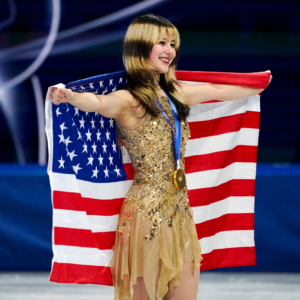
Alysa Liu won gold in women’s figure skating, the first for the US in the last 24 years.
In the men’s hockey final on the closing night, the US beat Canada 2–1 in overtime, clinching gold for the first time since 1980.
The Olympians that reached the podium went home making their countries proud. Norway was number one on the gold medal table, gaining 18 medals, followed by the United States (12) and then Italy and the Netherlands (each on 10). Other honourable mentions include Germany, France and Sweden who earned 8 each. Japan and China both secured 5 golds.
Brazilian skier Lucas Pinheiro Braathen won gold in the giant slalom – South America’s first-ever Winter Olympic medal.
Milano-Cortina 2026 did not escape from controversies as well as tense global dynamics that overshadowed some of the athletes’ achievements..
To begin with, the 2026 Winter Olympics’ organisers were faced with allegations of corruption and bid rigging and scandals over the sponsorship process, as well as investigations tied to construction contracts, as the stadiums were not finished until days before the official opening.
The infrastructure has always been a major concern for the public, particularly the delays, rising costs and environmental impact related to venue construction, including the rebuilding of the sliding centre in Cortina.
Harbingers’ Weekly Brief
Subscribe to the Harbingers’ Weekly Brief, a newsletter written by the editorial board of Harbingers’ Magazine, the world’s youngest newsroom, delivered to your inbox every Monday morning.
See you on Monday!
Ooops - please try again.
There have also been safety issues – a security guard died during site preparations – along with broader security worries such as airspace restrictions, the risk of cyberattacks, and the presence of US ICE agents.
There were also some very bizarre controversies. The “Penisgate” scandal was sparked by allegations that some Olympic ski jumpers may have injected hyaluronic acid into their genital area or otherwise altered measurements in order to receive larger – and therefore more aerodynamic – suits.
From cheaters asking for forgiveness to alleged penis injections and fake snow, the 2026 Winter Olympics were a chaotic mix of triumph and turmoil. While breathtaking performances on the ice and slopes reminded viewers of the spirits of the Winter Games, the controversies repeatedly pulled attention away from the athletes themselves.
For many spectators, the 2026 Milano-Cortina Olympics became as much a story about politics, pressure and public scrutiny as it was about medals and records.
Born in 2007 in Shanghai, Katie studies in Massachusetts, United States. She is interested in math and art and plans to study data science and economics. For Harbingers’ Magazine, she writes about science, human rights, and culture.
In her free time, Katie enjoys playing squash, reading, and art.
🌍 Join the World's Youngest Newsroom—Create a Free Account
Sign up to save your favourite articles, get personalised recommendations, and stay informed about stories that Gen Z worldwide actually care about. Plus, subscribe to our newsletter for the latest stories delivered straight to your inbox. 📲
We use cookies to ensure that we give you the best experience on our website. If you continue to use this site we will assume that you are happy with it.