


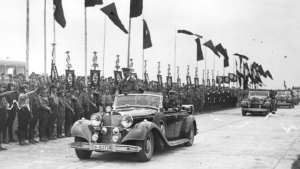
Economic miracle or myth? The Nazi economy, 1933–45



2026 Special Newsroom
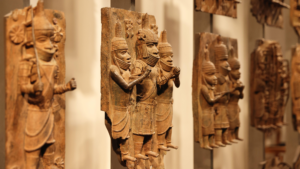
Who owns the past? Repatriation and the Benin Bronzes
This summer, I visited more than ten museums across Europe and the United States containing historical, art and ethnographic collections. Repatriation – the act of returning an object to its country or community of origin – has been at the centre of many of them.

How Nazi Germany won the support of millions of women
Before the First World War, women in Imperial Germany were subjected to the patriarchal structures typical of the time. Class divides meant that women’s experiences varied considerably. Upper-class women were expected to conform to strict feminine ideals, while working-class women were more likely to work outside the home as Germany’s industrialising economy demanded more labour.

Why Sarajevo still bears the scars of war
Holes in buildings, gaping wounds in concrete and damaged statues are jarring sights, but for the people of Sarajevo they are also part of their everyday landscape. More than 30 years after the Bosnian War (1992–95), reminders of the conflict are still visible across the city.
Editor’s pick

Why Singapore throws away food and how economics explains it
Singapore has never had the luxury of wasting space or resources. Some 6.21 million people live on an island roughly the size of New York City, making it one of the most densely populated countries in the world. With little farmland, limited natural freshwater and almost no room for conventional expansion, the city-state purifies seawater, reclaims land from the sea and imports more than 90% of its food.
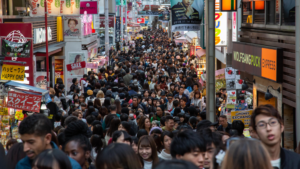
Is population growth really the problem, or is it how much we consume?
Last month, I was eating lunch with my family when my dad mentioned that population growth was one of the leading causes of climate change. It was a simple comment, but it left me wondering whether population size is our problem, or whether it is how much humanity consumes?

Dashain: The festival that brings friends and family together
Dashain, also known as Durga Puja or Navaratri, celebrates the victory of the goddess Durga over the demon Mahishasura, which symbolises the victory of good over evil. It is usually celebrated in October or November (Ashoj and Kartik in the Nepali calendar) and is a major event in Nepal and northern parts of India that have strong Nepali connections.



Film & Book Club

A system of exploitation in which, knowingly or not, we all participate – Parasite analysis
In a quiet neighbourhood of Seoul, two families live entirely different lives. One resides in a luxurious hilltop mansion surrounded by sunlight and space. The other struggles in a cramped semi-basement apartment where the window reveals little more than street-level feet passing by.

Oscars 2026. Four acting races, four strong opinions – and four correct predictions
Should an Oscar honour a single role in isolation, or also reflect a wider story about an actor’s career, public image, and cultural moment? The results of the 2026 Oscar night did not fully settle that question


Pattinson steals the show as Zendaya’s character is underdeveloped. The Drama review
The Drama is the ultimate cross-over of opposites: satire or thriller? The nerve-racking shots and storylines are flawlessly mixed with obscene humor and jokes.
Most read:





Featured author

Read more:

















© 2026 The Oxford School for the Future